
Products to compare
One hiking-shoe family, two moisture strategies
These Moab 3 versions keep the general shoe family recognizable while changing the upper and moisture strategy. The links are uncommissioned. Fit the exact size and width in each version because a shared family name does not guarantee the same feel.
Choose the regular Moab 3 when breathability and drying fit the expected route. Choose the Waterproof version when repeated shallow moisture and colder conditions justify a membrane. Reject either option if the exact version fails the indoor heel, toe, width, flex, and incline test.
These links lead to product listings or manufacturer buying options. PriceChomp earns no commission from them. How our links work.
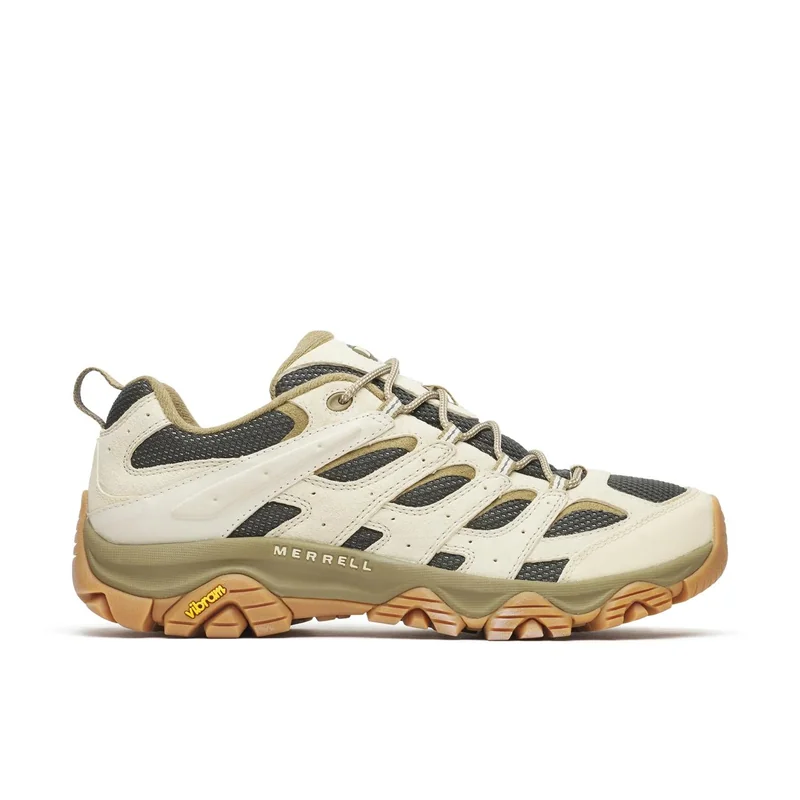
For warmer or generally dry routes
Merrell Men's Moab 3
Low hiking shoe with suede and breathable mesh upper; medium and wide options. Product family 52481M.
- Why choose it
- The regular Moab 3 uses a suede and breathable mesh upper and offers medium and wide selections, making it the relevant starting point when airflow and drying matter more than a membrane.
- The tradeoff
- Water can enter through the upper sooner. It still needs the exact size, width, socks, and indoor incline test, and breathable does not mean instantly dry.
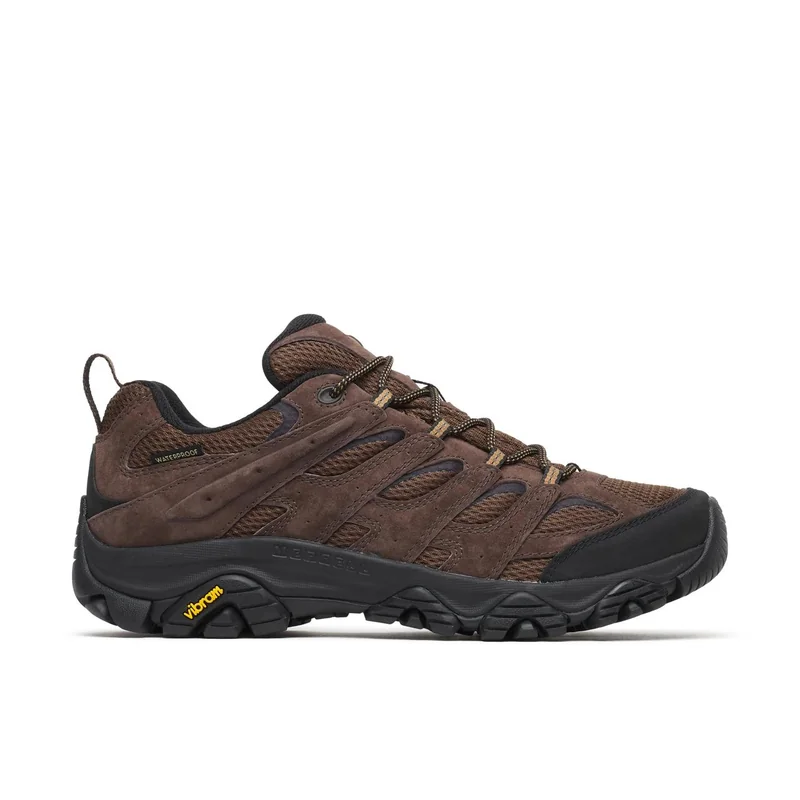
For repeated shallow moisture
Merrell Men's Moab 3 Waterproof
Low hiking shoe with a waterproof membrane; select size, width, and color explicitly. Product family 52474M.
- Why choose it
- The waterproof Moab 3 adds a membrane to the same named family and can serve routes with wet vegetation, mud, shallow puddles, or colder moisture when the exact shoe fits.
- The tradeoff
- Water can still enter over the collar, and the membrane can change heat, drying, and fit. Repeat the full fitting process instead of copying the regular version's size from memory.
Product details checked against the linked manufacturer and retailer pages. These are research-based comparisons, not hands-on tests. Check the selected model, current price, availability, and return terms before buying.
Start with the exact foot, sock, and route
Write the route surface, forecast range, water exposure, trip length, pack load, and opportunities to change socks or dry footwear. Then name any fit problem you already know, including wide forefoot, heel movement, toe contact on descents, arch pressure, or swelling later in the day. Waterproofing belongs after these requirements, not before them.
Use the socks and insoles you will actually hike in. Fit both shoes late enough in the day to include normal swelling, then walk, climb, descend, and stand on an incline indoors. A membrane choice is irrelevant if the heel slips, the toes hit, or pressure builds before the walk begins.
| Condition | More useful starting point | Reason to reconsider |
|---|---|---|
| Dry, warm trail | Breathable upper | Frequent wet brush or crossings |
| Cold, repeated shallow moisture | Waterproof membrane | Water can enter over the collar |
| Hot feet or heavy sweating | Breathable upper | No practical sock or drying plan |
| Multi-day wet travel | Test both | A soaked membrane shoe can dry slowly |
Understand what the membrane can and cannot do
A waterproof membrane is a barrier inside the upper. It can help with wet grass, shallow puddles, slush, and mud when water stays below the collar and the material remains intact. It does not make a low hiking shoe into a boot, seal the opening around the ankle, or guarantee dry feet through deep water.
The membrane also changes the heat and moisture balance inside the shoe. Your own sweat still has to move out, and socks can wick water down from above. Treat dry feet as a system that includes gaiters when appropriate, sock material, pace, temperature, water depth, and time to dry.
Give breathable shoes credit for drying
A non-waterproof upper can admit water sooner, but it can also release heat and dry faster under favorable conditions. That can matter on warm routes, stream crossings, and trips where avoiding internal sweat is more realistic than keeping every drop outside.
Do not translate breathable into instantly dry. Cushioning, lining, socks, humidity, shade, and temperature all affect drying time. Test the exact shoe and sock combination at home, then carry a dry sock plan instead of relying on a generic material label.
Fit both versions as different shoes
The regular and waterproof versions of a shoe family can use different upper constructions and feel different around the toes, instep, and flex points. Select the exact size and width in each version and repeat the full fitting process. Do not order the waterproof model from memory because the non-waterproof version once fit.
Walk downhill on a safe indoor ramp or incline. The heel should remain controlled while the toes stay clear of the front. Check both feet, because one may be longer or wider. A pressure point that appears in the store is unlikely to improve during a long wet day.
Price the complete moisture plan
Compare delivered price in the exact size, width, and color. Add the socks, insoles, gaiters, care products, and backup footwear you actually need. A lower shoe price can lose its advantage when it creates a second purchase or does not work with the chosen sock thickness.
Review the return rules before wearing the shoes outside. Complete the indoor fit work while the pair remains eligible. Once the chosen version passes, break it in gradually with the same socks and load instead of making a long trip the first real test.
Choose the failure you can manage
The waterproof failure is often heat, trapped moisture, or slow drying after water gets inside. The breathable failure is earlier entry from wet vegetation, puddles, or cold water. Compare which problem is more likely on your route and which one your sock, pace, and drying plan can handle.
If the route changes substantially by season, one pair may not be the universal answer. Buy for the trips you will actually take next, not for every hypothetical climate. A well-fitted breathable shoe and a well-fitted waterproof shoe solve different moisture problems.