

Products to compare
Compare the same R50 through two sellers
Holding the camera model constant makes condition, included parts, and seller terms easier to evaluate. These links lead to offers to inspect, not copies we have tested.
Choose the used body only when its individual report and usable return window justify the saving against the refurbished offer. Save both sellers' current terms with your order.
These links lead to product listings or manufacturer buying options. PriceChomp earns no commission from them. How our links work.
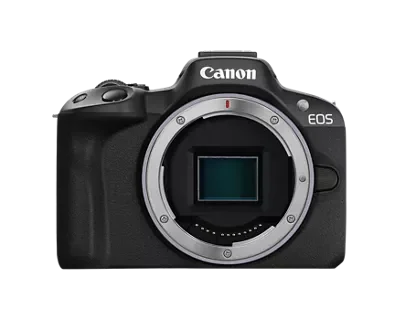
For comparing individual used copies
Used Canon EOS R50 at MPB
R50 body listings with individual condition reports, photographs, and included-item lists.
- Why choose it
- Use the unit photographs and included-item list to decide whether a cosmetic downgrade buys a worthwhile saving.
- The tradeoff
- A grade is not a complete defect report. Check the exact unit, return deadline, and responsibility for return shipping.
A manufacturer-refurbished reference
Refurbished Canon EOS R50 body
Canon refurbished R50 body listing. Read the selected offer for contents and coverage.
- Why choose it
- Use Canon's own refurbished offer as a second quote for the same camera body.
- The tradeoff
- Do not assume the refurbished label means new condition or identical coverage. Read the applicable terms and contents.
Product details checked against the linked manufacturer and retailer pages. These are research-based comparisons, not hands-on tests. Check the selected model, current price, availability, and return terms before buying.
Translate every condition grade into facts
Excellent, good, bargain, and well used are labels, not interchangeable measurements. Start with the seller's current written definition, then record the actual cosmetic, optical, mechanical, and electronic findings for the individual item. A camera with honest grip wear can be less risky than a cleaner example with vague notes about a card slot or control dial.
Keep excluded defects on the same page as the grade. Sensor scratches, viewfinder damage, fungus, haze, separation, impact damage, liquid exposure, intermittent controls, missing port covers, and third-party repairs do not belong in one generic wear column. If the listing does not say whether a costly area was inspected, mark it unknown instead of silently promoting it to working.
- Copy the exact item grade and the seller's definition.
- Record item-specific defects separately from normal cosmetic wear.
- Identify which functions were tested and which remain unknown.
- Save the listing and terms that apply at the time of purchase.
Treat the return window as inspection time
A return window has value only if it gives you enough time to receive the item, test it with known-good equipment, review the files, and start a return before the deadline. Read when the clock begins, whether authorization is required, which condition the item must be returned in, who pays return shipping, and whether restocking or original-shipping charges can apply.
Also separate a change-of-mind return from a defective-item claim. The process, deadline, shipping responsibility, and available remedy may differ. Keep the packaging until testing is complete, document the unboxing, and avoid a paid assignment or important trip until the camera has passed the ordinary checks you can perform calmly.
Read the warranty as a repair contract
Identify who provides the warranty, how long it lasts, where service occurs, and which remedies are available. A seller warranty, manufacturer warranty, marketplace protection program, and paid service plan can cover different events. Do not combine them into one larger promise or assume a manufacturer will cover a used or region-specific item.
Look for exclusions involving accidental damage, liquid, impact, sand, misuse, consumable batteries, cosmetic wear, pre-existing defects, shutter assemblies, stabilization, or unauthorized repair. Then check the claim procedure. Shipping cost, diagnostic fees, repair location, replacement discretion, and required documentation can change the practical value of otherwise similar coverage.
Build the arrival test around expensive failures
Test the exact risks that would be costly to discover later. For a body, use a known lens, battery, card, and cable to check sensor output, autofocus, stabilization, card slots, ports, video, burst operation, displays, controls, charging, and file transfer. For a lens, inspect glass and mount condition, then test focus, aperture, stabilization, zoom, and image consistency at several distances and focal lengths.
Normal wear should not become a hunt for microscopic perfection. Compare the delivered item with the listing description and with the work you need it to perform. If a defect appears, stop adding wear, save representative files, and follow the written return or warranty process before the deadline.
| Protection layer | Record before checkout | Test or action |
|---|---|---|
| Condition grade | Definition and item-specific defects | Compare delivered item with listing |
| Return terms | Clock, authorization, fees and shipping | Set the last safe return date |
| Warranty | Provider, duration, exclusions and remedy | Keep invoice and serial evidence |
| Marketplace protection | Eligible event and filing deadline | Do not treat it as a general warranty |
| Arrival inspection | Known-good lens, card, battery and files | Complete before protection expires |
Compare the protected cost, not just the item price
Put the delivered price, required accessories, likely return cost, coverage, inspection time, and remaining unknowns in one row for each candidate. A higher-priced item can be the better purchase when its condition is specific, its inspection window is usable, and the seller provides a clear remedy. A cheap listing can still win when the disclosed wear is acceptable and the price leaves a sensible repair buffer.
My decision sentence is simple: this exact item costs $____ ready to use, these defects are disclosed, I have until ____ to test it, and ____ is responsible if a covered failure appears. If I cannot fill those blanks from current written terms, the lower number is not yet a comparable price.