

Products to compare
Apply the checklist to an actual R50 offer
Use the used R50 listings for unit-level inspection and the new body listing as a price ceiling reference. Keep the body configuration consistent.
Choose a used copy only after its report, included equipment, and return terms pass the checklist. If the saving is small after replacing missing items, compare the new-body alternative.
These links lead to product listings or manufacturer buying options. PriceChomp earns no commission from them. How our links work.
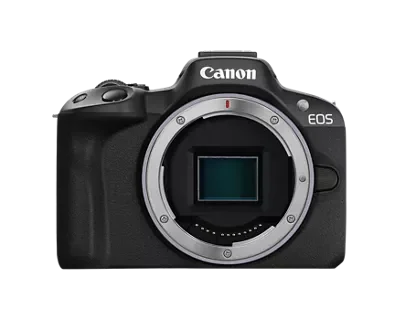
The unit you need to inspect
Used Canon EOS R50 at MPB
R50 body listings with individual condition reports, photographs, and included-item lists.
- Why choose it
- Check the selected copy's photographs, wear notes, controls, shutter information if supplied, and included battery equipment.
- The tradeoff
- A model-level page is not the unit you will receive. Save the selected listing and plan functional checks within the return window.
The new-body cost reference
Canon EOS R50, body only
24.2MP APS-C mirrorless camera with Canon RF mount. Select the body-only configuration.
- Why choose it
- Use a new body quote to judge whether the used discount pays for the additional uncertainty.
- The tradeoff
- A new-body quote still needs the right configuration and terms. Neither body-only route provides a lens.
Product details checked against the linked manufacturer and retailer pages. These are research-based comparisons, not hands-on tests. Check the selected model, current price, availability, and return terms before buying.
Begin with the exact body and its working history
Copy the complete model name, regional version, color, and included items before comparing prices. A family name can cover several generations, and a listing title may omit a suffix that changes wireless features, language support, warranty eligibility, or included charging equipment.
For cameras with a mechanical shutter, ask for the shutter count when the seller can provide it. Treat that number as one piece of wear evidence, not an expiration clock. Electronic-shutter use, video hours, weather exposure, port wear, repairs, and long storage can matter without appearing in the count.
- Exact model and regional version.
- Mechanical shutter count, when available.
- Prior repair, rental, studio, or professional use.
- Original or compatible battery and charging method.
- Seller condition grade and its written definition.
Make the sensor and stabilization questions specific
Dust that appears at small apertures can often be cleaned. A deep scratch, coating damage, stuck pixel cluster, or stabilization fault is a different risk. Ask whether the sensor has been inspected or cleaned and whether sample files are available. A low-resolution listing image cannot settle sensor condition.
If the body has in-camera stabilization, confirm that it initializes without an error and behaves normally with a compatible lens. Also check autofocus, card slots, hot shoe, microphone and headphone ports, USB and HDMI ports, viewfinder, rear display, buttons, dials, and doors. The least glamorous controls are often the ones that reveal heavy use.
Price the missing pieces at today’s prices
A body-only listing may lack the battery, charger, eyecup, body cap, strap, cable, manual, or original box. Decide which items you need, then price safe replacements before calling the listing cheaper. Batteries deserve special attention because old packs can show a full charge and still deliver disappointing runtime.
Third-party accessories are not automatically poor, but they should not be valued as if they were current manufacturer originals. I keep the camera price and the get-it-working price on separate lines. That makes a complete, slightly more expensive listing easier to compare with an incomplete bargain.
| Check | What to record | Why it matters |
|---|---|---|
| Identity | Full model and region | Prevents near-match comparisons |
| Wear | Count, exterior notes, port and control condition | Shows more than cosmetics |
| Function | Sensor, autofocus, stabilization, slots and ports | Finds expensive failures |
| Package | Battery, charger, caps and accessories | Reveals ready-to-shoot cost |
| Protection | Return window and warranty | Prices the remaining uncertainty |
Use the return window as part of the condition grade
A condition label is useful only when its definition is visible and the seller stands behind it. Read the return window, restocking terms, excluded defects, warranty length, and who pays return shipping. Marketplace protection, retailer warranty, and manufacturer warranty are not interchangeable.
When the camera arrives, document the unboxing and test it promptly with a known lens, memory card, battery, and computer. Photograph a plain bright surface at several apertures, inspect files at normal viewing sizes, test focus and burst operation, record video, check every control, and confirm both charging and data transfer. A fast, calm inspection is more useful than waiting for a special trip.