

Products to compare
Stored battery energy or fuel-powered generation
The EcoFlow bundle and Champion inverter are not equivalent watt badges. One stores a finite amount of electrical energy, while the other generates electricity from gasoline or propane in a safe outdoor location. The links are uncommissioned. Compare them against the same hourly load schedule and replenishment plan.
Choose the RIVER 3 Max path for quiet short-duration loads that fit its rated output, usable energy plan, and recharge options. Choose the Champion path when longer or higher-energy operation justifies fuel, outdoor placement, cords or transfer equipment, maintenance, and rehearsal. A layered plan can use both only when every handoff is documented and tested.
These links lead to product listings or manufacturer buying options. PriceChomp earns no commission from them. How our links work.
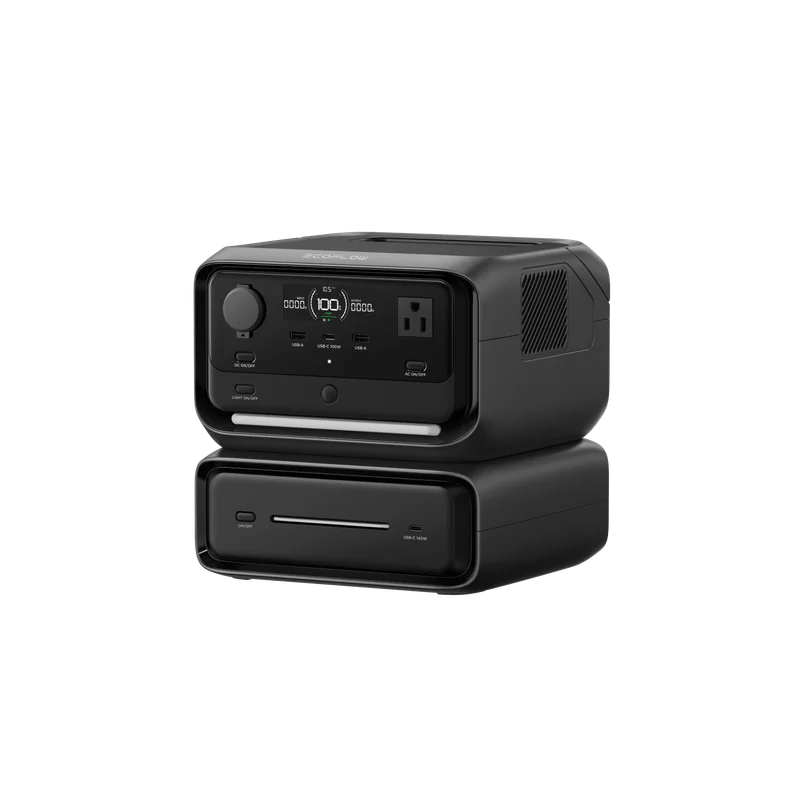
For quiet stored power and a defined recharge path
EcoFlow RIVER 3 Max bundle
RIVER 3 Plus with EB300 extra battery: 286Wh + 286Wh, or 572Wh total nominal capacity; 600W rated AC output.
- Why choose it
- The linked bundle combines a RIVER 3 Plus and EB300 for 572Wh nominal capacity with 600W rated AC output. Those figures can be tested directly against an hourly load schedule.
- The tradeoff
- Nominal capacity is not delivered AC runtime, and 600W does not cover every startup demand. Price the exact charging method, cables, reserve, and several-outage-day plan.
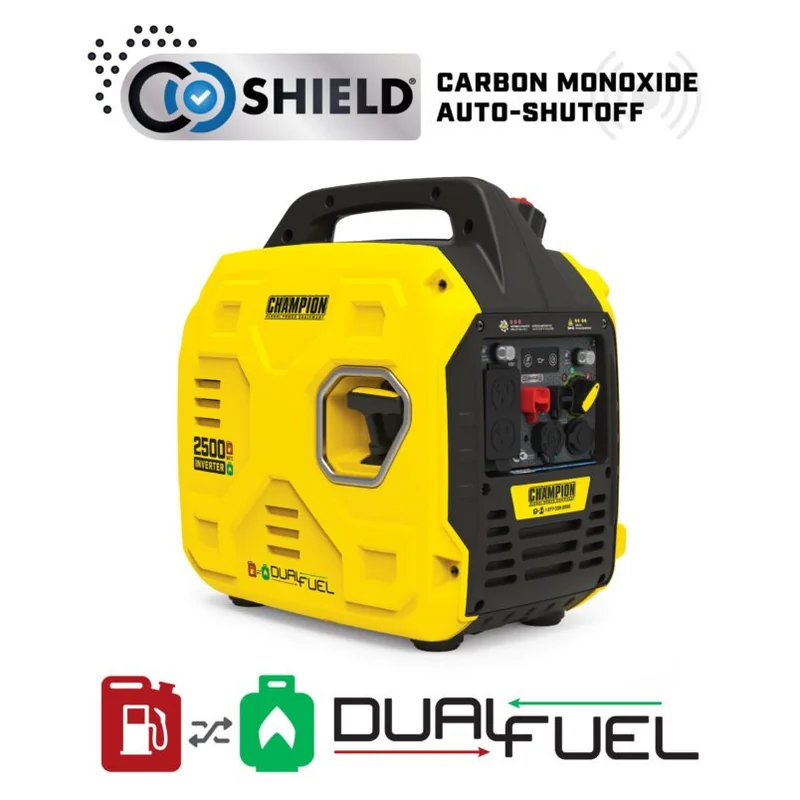
For fuel-backed generation outdoors
Champion 201183 dual-fuel inverter
120V output; 1850 running watts on gasoline or 1665 on propane. 2500 starting watts.
- Why choose it
- Champion publishes separate gasoline and propane running-output figures for exact model 201183, allowing the chosen fuel mode and load schedule to be evaluated without treating starting watts as continuous output.
- The tradeoff
- It requires safe outdoor operation, fuel, approved connections, maintenance, and a practiced shutdown and refueling routine. It cannot be used in a home, garage, shed, or other enclosed or partly enclosed area.
Product details checked against the linked manufacturer and retailer pages. These are research-based comparisons, not hands-on tests. Check the selected model, current price, availability, and return terms before buying.
Turn the outage into an hourly load schedule
List each required device, its verified running watts, any startup demand, hours per day, and whether it must run at the same time as another load. Separate necessities from conveniences. A refrigerator cycle, medical device, modem, light, sump pump, heater, and cooking appliance create different timing and safety constraints.
Calculate watt-hours for each scheduled load by multiplying watts by hours, then add realistic conversion and reserve allowances. Use a plug-in meter or manufacturer information when the label is incomplete. The schedule is the requirement. The source rating is only evidence that a candidate might meet it.
| Question | Power station | Generator |
|---|---|---|
| Where can it operate? | As permitted by its manual, without combustion exhaust | Only in a safe outdoor location under current safety guidance |
| What limits duration? | Stored energy and recharge rate | Fuel supply, load, and maintenance |
| What limits load? | Rated output, surge behavior, battery state | Running output, starting output, fuel mode |
| What must be rehearsed? | Charging, cables, load order, shutdown | Placement, fuel, startup, connections, shutdown |
Keep power and energy in separate columns
Watts describe how much power can be supplied at a moment. Watt-hours describe stored or consumed energy over time. A battery unit can have enough output to start a load but too little stored energy to run it through the night. A generator can have enough running output but still depend on a finite fuel supply and refueling schedule.
Compare the exact configurations. The EcoFlow example combines a RIVER 3 Plus and EB300 for 572Wh nominal capacity with 600W rated AC output. Champion lists model 201183 at 1,850 running watts on gasoline or 1,665 on propane. These figures answer different questions and should never share one unlabeled score.
Check startup demand and connection method
Motors and compressors can draw more power when starting than while running. Record the verified startup requirement and test the actual load under controlled conditions before an outage. Do not assume a surge marketing number guarantees compatibility with every motor, control board, power supply, or waveform-sensitive device.
Plan how electricity reaches the load. Extension cords must be suitable for the current, length, environment, and manufacturer guidance. A building connection requires an appropriate installed transfer method and qualified work. Never improvise a connection that can energize utility lines or bypass electrical protection.
Treat location as a hard safety requirement
A fuel-burning generator produces carbon monoxide and cannot be used in a home, garage, shed, crawl space, or other enclosed or partly enclosed area. The safe outdoor placement, weather protection allowed by the manufacturer, cord route, exhaust direction, security, and distance from openings must work at the actual property.
A power station avoids combustion exhaust at the point of use, but it still has battery, temperature, ventilation, charging, moisture, cable, and storage requirements. Follow the exact manual. Indoor convenience does not make every load, charging method, or placement safe.
Build a replenishment plan, not just a runtime estimate
For a power station, identify grid charging, vehicle charging, compatible solar input, expected recharge time, and what happens during several low-sun days. For a generator, identify approved fuel, safe storage, fuel age management, likely consumption, local availability, and how refueling will be handled after shutdown and cooling.
Long outages expose weak replenishment plans. A battery can be ideal for the first quiet night and then become empty. A generator can run longer but be useless without fuel, safe placement, oil, and a practiced startup. Compare the whole chain that restores useful energy.
Price readiness and maintenance
Add the exact cables, chargers, solar equipment, fuel containers, fuel, oil, covers, weather-rated cords, meters, transfer equipment, installation, and replacement consumables required by the plan. Do not count optional bundles as value when their components do not serve the selected loads.
Schedule periodic charging, inspection, firmware or manual review where applicable, generator exercise, fuel rotation, and a loaded rehearsal. Record battery state and fuel readiness without making unsupported lifespan assumptions. The cheaper unit is not cheaper if it is unready when the outage begins.
Choose one source or a layered plan
A smaller battery source can cover silent electronics and overnight communication while a generator handles scheduled high-energy loads outdoors. That layered plan can reduce fuel use and noise, but only if the added equipment, charging path, and handoff are documented and tested.
If one source meets every essential load with a safe location and reliable replenishment, simplicity may be more valuable than a hybrid system. Write the operating sequence and let another household member perform the rehearsal. A plan that only one person can explain is not fully ready.