

Products to compare
The same blade class with two power plans
These 7-1/4-inch DEWALT saws both list a maximum 2-9/16-inch cutting depth at 90 degrees, making power access, complete setup, and handling more useful distinctions than blade diameter. The links are uncommissioned, and PriceChomp has not hands-on tested either saw.
Choose the DWE575SB when dependable power and safe cord routing cover the real work. Choose the DCS590B when moving among work areas or removing the cord from the cut path is worth the compatible battery, charger, runtime, and replacement plan.
These links lead to product listings or manufacturer buying options. PriceChomp earns no commission from them. How our links work.
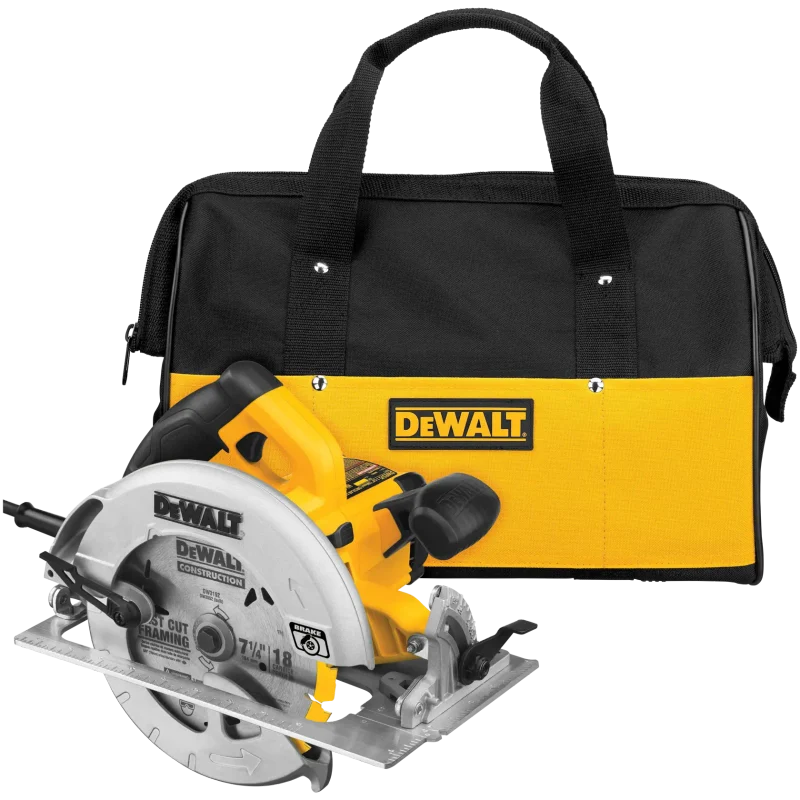
For repeat work near dependable power
DEWALT DWE575SB corded circular saw
120V, 15-amp corded saw with a 7-1/4-inch blade, electric brake, and maximum cutting depth of 2-9/16 inches at 90 degrees.
- Why choose it
- Its 120V, 15-amp corded configuration avoids traction-battery capacity and charging decisions while retaining a 7-1/4-inch blade and stated 2-9/16-inch depth at 90 degrees.
- The tradeoff
- You still need a safe outlet and cord plan. Inspect cords, keep them away from the blade and work edges, and include any permitted extension equipment in the complete setup.
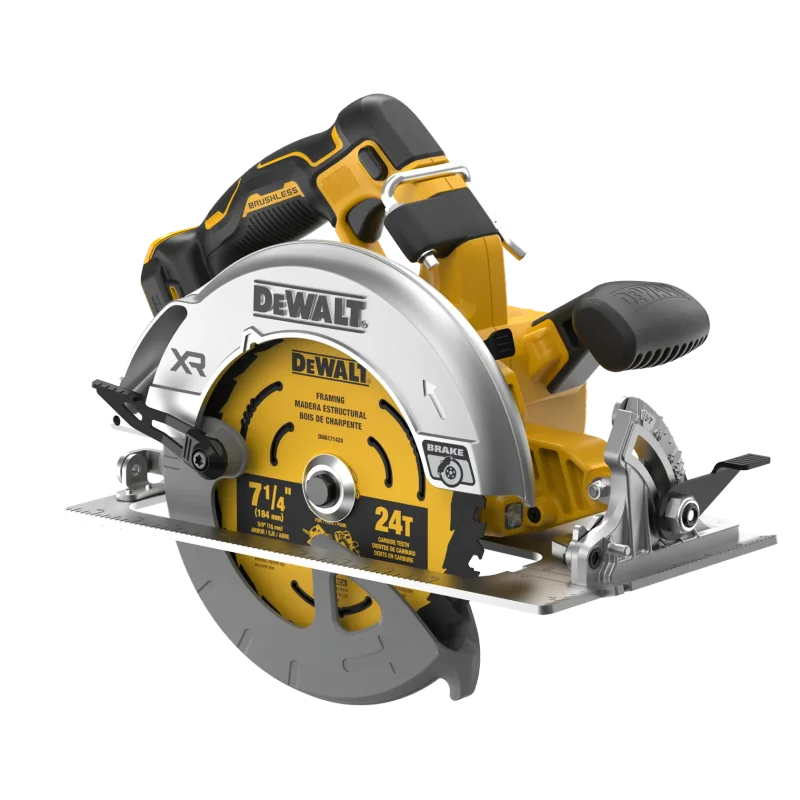
For work that materially benefits from mobility
DEWALT DCS590B circular saw, tool only
20V MAX brushless 7-1/4-inch saw; maximum cutting depth 2-9/16 inches at 90 degrees. Battery and charger separate.
- Why choose it
- Its tool-only 20V MAX configuration removes the power cord while keeping the same blade class and stated 2-9/16-inch depth at 90 degrees.
- The tradeoff
- Battery and charger are separate. Runtime depends on the battery and work, and a ready-to-cut comparison must include battery weight, charging, reserve capacity, and eventual replacement.
Product details checked against the linked manufacturer and retailer pages. These are research-based comparisons, not hands-on tests. Check the selected model, current price, availability, and return terms before buying.
Start with one cut plan, not a power-source preference
Write down the stock thickness, bevel angle, cut length, number of cuts, and places where the work will happen. A saw earns consideration only if its manufacturer-rated blade size and cutting depth cover those cuts. Portability cannot make an undersized saw suitable, and an outlet cannot make an awkward saw easy to control.
The DEWALT DWE575SB and DCS590B make a useful power-source comparison because both use a 7-1/4-inch blade and list a maximum 2-9/16-inch cutting depth at 90 degrees. They are not otherwise identical. Compare their complete specifications, controls, weight with the intended battery or cord arrangement, and supplied equipment before treating the power source as the deciding variable.
Choose corded when the outlet path is predictable
A corded saw can make sense for a garage, shop, or fixed renovation area where suitable power is close and the cord can stay behind the operator and away from the blade path. The DWE575SB is a 120V, 15-amp saw with a 7-1/4-inch blade, electric brake, and contractor bag. The saw does not require a traction battery or charger.
That simplicity does not make the power arrangement free. Inspect the tool cord and any extension cord before use, match the cord and circuit to the manufacturer instructions, and plan the route so it cannot be pinched, cut, pulled across an edge, or used as a trip line. OSHA guidance specifically calls for visual inspection of portable cord-and-plug equipment and removal from service when damage could expose a person to injury.
Choose cordless when movement changes the work
A cordless saw earns its premium when the work moves among rooms, a yard, a vehicle, or a site without a convenient power path. It can also remove a cord from long sheet cuts and repeated repositioning. The DCS590B is a tool-only 20V MAX saw, so a useful comparison must include a compatible battery, charger, charging location, and enough capacity for the planned session.
Do not turn a manufacturer cut-count claim into a personal runtime promise. Material, blade, feed rate, battery condition, temperature, depth setting, and bevel all affect the work completed per charge. Use the manufacturer test conditions as context, then borrow, rent, or test the intended battery and material when an uninterrupted session matters.
Compare handling in working configuration
Install the battery you would actually use on the cordless saw. Route the intended cord behind the corded saw. Then check the main grip, front handle, trigger and lock-off, sightline, guard movement, base, depth control, bevel control, and balance. A bare-tool weight and a corded-tool weight do not describe the same ready-to-cut setup.
Rehearse a full cut with both tools unplugged or with the battery removed. Support and clamp the work, set the base on the material, follow the intended line, finish the cut, and place the saw down safely. The better power source is the one that reduces interference without making control, setup, or support worse.
Price the complete working setup
Compare delivered totals for the same job. Include only equipment that is compatible and actually required. Give existing batteries a realistic value because they wear and because using them here can prevent another tool from being ready. Give unwanted bundle pieces a value of zero.
| Cost or constraint | Corded setup | Cordless setup |
|---|---|---|
| Power equipment | Suitable circuit and any permitted cord arrangement | Compatible battery capacity, charger, and charging access |
| Cutting equipment | Correct blade, guide, support, and dust plan | Correct blade, guide, support, and dust plan |
| Work interruption | Outlet relocation and cord management | Charging, battery swaps, and battery cooling |
| Ownership cost | Cord inspection, storage, and replacement | Battery aging, replacement, and platform commitment |
| Mobility | Reach and safe routing at every cut | Ready batteries at every work area |
Keep blade and safety decisions separate from power source
Use the correct blade diameter, arbor, tooth pattern, material rating, and maximum speed for the exact saw and job. Set cutting depth according to the manual, support the work on both sides of the planned cut where instructed, and keep the lower guard free to return. OSHA requires guarding above and below the base plate on portable circular saws and a control that shuts off power when released.
Disconnect the plug or remove the battery before adjustments and blade changes. Neither power source prevents kickback, a binding kerf, poor support, an incorrect blade, or a hand entering the cut area. Read the exact manual, use required protective equipment, and follow applicable workplace rules rather than relying on a general buying guide for operating instructions.
Use a two-session decision test
For the first session, recreate the longest ordinary cut near your usual work area. Record setup time, cord moves or battery state, handling, interruptions, and cleanup. For the second, recreate the most mobile job you reasonably expect, including stairs, outdoor distance, room changes, or vehicle access. Use the same suitable blade class and comparable stock.
A corded saw wins only if its power arrangement remains safe and practical across the real cuts. A cordless saw wins only if its mobility saves meaningful friction and the battery plan completes the work with an acceptable reserve. If both pass, choose on complete cost, handling, and the job you perform more often.
Write the purchase rule before opening a deal page
Finish this sentence: I need a 7-1/4-inch saw to complete ____ cuts through ____ material at ____ bevel, in work areas with ____. Corded or cordless is better because it removes ____ without adding an unacceptable ____.
Then record the exact model, supplied items, required power equipment, blade, seller, condition, delivery or pickup cost, return path, and written warranty. A discount matters only after the exact setup passes the cut plan. If the sentence remains vague, keep the current saw, rent for the unusual job, or test both configurations before buying.