

Products to compare
Choose blade capacity around the cut
Compare two cordless saw sizes within the same battery platform. Check the cutting depth at your intended bevel, not only at 90 degrees.
Start with the DCS565B if its cutting capacity covers your stock and you prefer its handling. Choose the DCS590B when the larger blade and verified depth solve a recurring job.
These links lead to product listings or manufacturer buying options. PriceChomp earns no commission from them. How our links work.
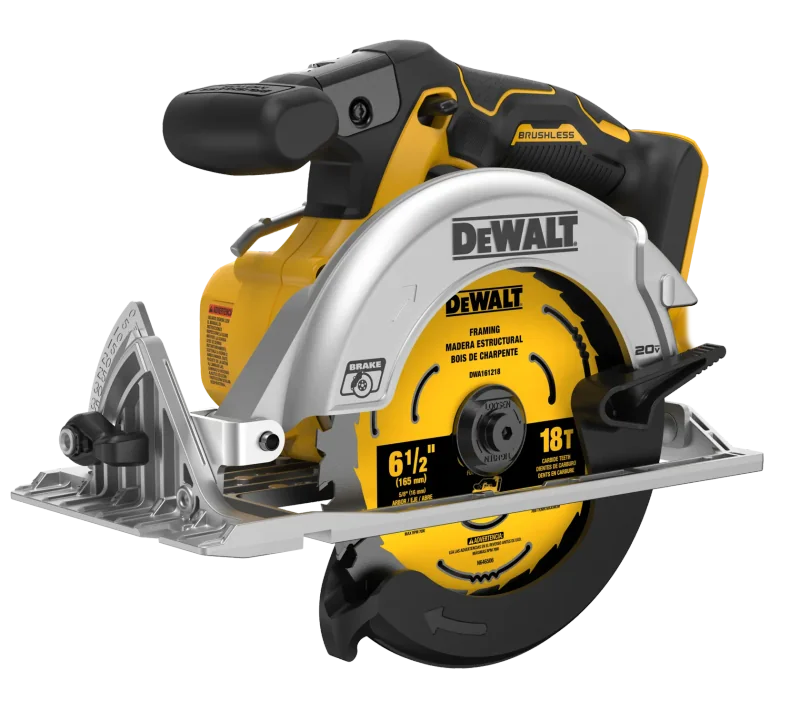
For work that fits a 6-1/2-inch blade
DEWALT DCS565B circular saw, tool only
20V MAX brushless saw with a 6-1/2-inch blade and electric brake. Battery and charger separate.
- Why choose it
- This gives you a smaller blade class to evaluate for sheet material and ordinary wood projects.
- The tradeoff
- The smaller blade limits maximum depth. Check the manual for beveled cuts and handle the saw with a battery installed before choosing.
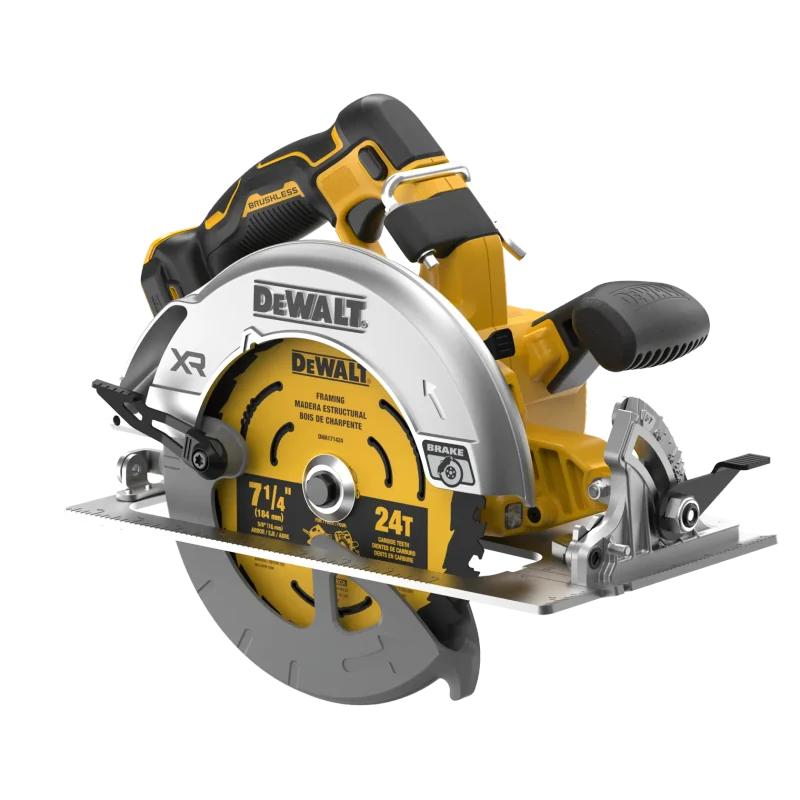
For a larger cutting envelope
DEWALT DCS590B circular saw, tool only
20V MAX brushless 7-1/4-inch saw; maximum cutting depth 2-9/16 inches at 90 degrees. Battery and charger separate.
- Why choose it
- Its listed 2-9/16-inch depth at 90 degrees makes a specific capacity comparison possible.
- The tradeoff
- Extra capacity is wasted if every cut fits the smaller saw. Budget for compatible batteries and the correct blade for your material.
Product details checked against the linked manufacturer and retailer pages. These are research-based comparisons, not hands-on tests. Check the selected model, current price, availability, and return terms before buying.
Begin with the cuts you need to make
List the material thickness, cut length, and whether the work happens near an outlet. Common full-size saws handle typical framing and sheet-goods tasks, while compact saws trade cutting depth and blade selection for lower weight. Confirm the manufacturer-rated cutting depth at both 90 and 45 degrees.
Corded saws offer steady power without battery planning. Cordless saws are convenient for mobile work, but performance and runtime depend on the specified battery system and capacity.
Check the sightline and ergonomics
Handle shape, trigger reach, weight distribution, guard action, and visibility of the cut line affect every cut. Blade-left and blade-right layouts change the sightline and where dust travels. The best arrangement depends on your stance and handedness, so handle the saw in person when possible.
Treat the included blade as a separate decision
An included general-purpose blade may be adequate for rough work but unsuitable for a clean plywood or finish cut. Confirm arbor size, blade diameter, tooth count, and material compatibility. Add the right blade to the delivered cost when comparing a low-priced saw with a better-equipped kit.
- Electric brake and blade guard operation.
- Bevel range and positive stops.
- Dust port compatibility.
- Rafter hook or storage needs.
- Battery and charger included or sold separately.
Buy enough saw, then improve the setup
A straightedge guide, stable work support, suitable blade, eye protection, and dust control often improve results more than a jump to the most expensive saw. Compare the complete working setup, verify that all safety features operate correctly, and follow the manufacturer instructions before use.
Compare corded and cordless as complete systems
A corded saw includes its power source but may require a suitable extension cord and more cable management. A cordless saw requires compatible batteries and enough capacity for the planned cuts. Compare each saw with everything needed to complete the same project, including the appropriate blade, guide, dust connection, and power arrangement.
For cordless models, check performance guidance for the battery capacity recommended by the manufacturer. A small pack may keep weight down but limit sustained work. A large pack may improve runtime while changing balance. If you already own the platform, test whether your actual batteries are compatible rather than assuming every pack with the same logo is ideal.
Handle the exact saw before deciding when possible
With the battery installed or cord positioned, check trigger reach, grip angle, front-handle shape, depth and bevel adjustments, guard movement, and visibility on both sides of the blade. Confirm that the base sits flat and the controls can be read and locked without awkward force. These details are difficult to infer from a specification sheet.
Review the manual for approved blade sizes, setup, inspection, kickback precautions, and required protective equipment. A saw should be rejected if the controls, weight, or sightline make you less confident in maintaining stable support and a controlled cut.