

Products to compare
Three-gallon portability or twelve-gallon capacity
These corded RIDGID wet/dry vacuums represent different handling and emptying plans. The links are uncommissioned. Match the supplied filter, hose, accessories, and permitted material to the actual cleanup before comparing tank size or peak-horsepower labels.
Choose the HD0300 when carrying, stairs, vehicle work, small frequent cleanup, and compact storage dominate. Choose the HD1200 when sustained bulky pickup and fewer emptying stops justify its larger footprint and heavier filled tank. Neither is the right choice for material its manual, filter, or collection method does not permit.
These links lead to product listings or manufacturer buying options. PriceChomp earns no commission from them. How our links work.
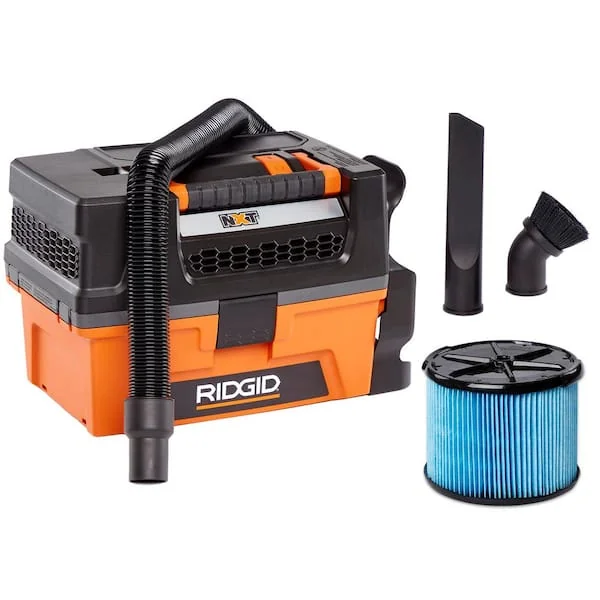
For frequent small cleanups and carrying
RIDGID HD0300 wet/dry vacuum
Corded 3-gallon vacuum with a fine-dust filter, expandable hose, and attachments in the linked package.
- Why choose it
- The 3-gallon HD0300 package pairs a compact tank with a fine-dust filter, expandable hose, and attachments, making movement and storage part of the exact comparison.
- The tradeoff
- It will require more frequent emptying and may need different permitted filters or accessories for the intended material. Compact capacity does not reduce the need for safe disposal.
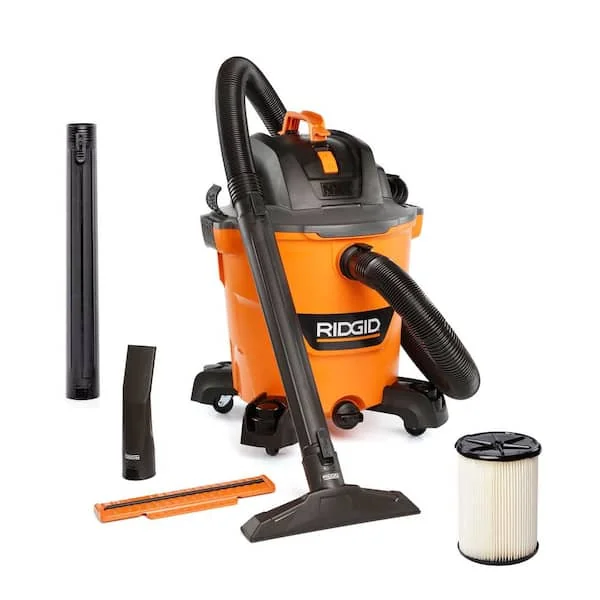
For longer pickup sessions in one area
RIDGID HD1200 wet/dry vacuum
Corded 12-gallon vacuum with a general-debris filter, locking hose, and attachments in the linked package.
- Why choose it
- The 12-gallon HD1200 package offers more tank volume with a locking hose, attachments, and a general-debris filter, reducing interruptions when the material and disposal plan suit the machine.
- The tradeoff
- A larger filled tank is harder to move, especially with liquid. It takes more storage space, and its supplied general-debris filter may not be the correct configuration for fine or specialized material.
Product details checked against the linked manufacturer and retailer pages. These are research-based comparisons, not hands-on tests. Check the selected model, current price, availability, and return terms before buying.
Describe the cleanup before choosing gallons
List the material, typical volume, particle size, liquid exposure, cleanup frequency, work area, stairs, vehicle use, outlet access, and storage location. Sawdust around one bench, renovation debris, a car interior, and a flooded utility area are different jobs even when every product is called a wet/dry vacuum.
Exclude anything the product manual or filter system does not permit. Hazardous, combustible, hot, toxic, or health-sensitive material can require specialized collection, filtration, grounding, disposal, and protective equipment. Tank capacity is not a safety rating.
| Requirement | Compact advantage | Full-size advantage |
|---|---|---|
| Carrying route | Easier around stairs and vehicles | Fewer trips to empty |
| Storage | Smaller footprint | More onboard room and capacity |
| Cleanup volume | Efficient for frequent small jobs | Better for sustained bulky pickup |
| Reach | Move the unit closer | Longer setup can cover a larger zone |
Compare usable movement, not motor badges alone
Peak horsepower is not a complete measure of pickup performance. Hose diameter and length, airflow path, sealed suction, filter loading, nozzle, debris type, and electrical supply all affect the result. Compare exact published specifications only when they use the same definition.
Build a movement test from the real workspace. Include lifting from storage, carrying with the hose and tools, fitting through doors, reaching the far corner, moving around a vehicle, emptying, and returning the unit. A large tank saves emptying only if the filled machine remains manageable.
Match tank size to the emptying routine
A compact tank fills sooner, but frequent emptying can be acceptable when jobs are small and the disposal point is close. A large tank reduces interruptions, yet wet material becomes heavy and awkward quickly. Decide the maximum filled amount you can move safely, not the theoretical tank volume you hope to use.
Check how the lid releases, where liquid exits, whether a drain is present, and how debris is transferred without spilling. Plan a bag or container when permitted. The cleanup after the cleanup belongs in the buying decision.
Choose the filter for the material
The exact filter supplied with the machine is part of the comparison. Fine dust, ordinary debris, liquids, and health-sensitive material can require different filters, collection bags, or a different class of extractor. Follow the manufacturer's configuration and do not assume a general filter is suitable because it physically fits.
Price replacement filters and bags at the expected cleanup frequency. A larger vacuum that repeatedly loads an unsuitable filter can perform worse and cost more than a correctly configured smaller unit. Filter maintenance also changes exposure during emptying, so include the disposal process.
Inspect hose, cord, and accessory reach
Measure the path from the outlet to the farthest pickup point. Record cord length, hose length, hose diameter, wand reach, and the nozzle needed for the real surface. Do not combine cord and hose numbers as if the machine can always sit at the maximum stretched distance without tipping or obstructing the work.
Check where the hose, cord, wands, and nozzles store. An accessory included in the box has little value if it is repeatedly lost or does not fit the job. Price any required extension, floor tool, crevice tool, dust adapter, or compatible hose before comparing totals.
Run one dry job and one wet plan
For dry work, test pickup, maneuvering, noise, filter access, and disposal using ordinary permitted material. For possible liquid work, read the exact conversion and shutdown instructions before the emergency. Identify how the unit signals capacity and how the tank will be emptied without lifting an unsafe load.
Do not create a flood just to test the vacuum. Rehearse the setup with clean water only when the manual permits it, protect the electrical connection, and keep the machine upright. Record which filters or bags must be removed or changed so the emergency setup does not depend on memory.
Buy for the repeated job
If most cleanups are small and the vacuum must travel, the compact unit can be the more useful tool even when a larger model costs only a little more. If the regular job creates bulky material or long pickup sessions in one area, full-size capacity can reduce interruptions enough to justify its footprint.
Compare delivered price, included filter, hose, accessories, replacement supplies, storage, and the handling test. The best size is the one that gets used, emptied, maintained, and stored correctly after the ordinary job.