

Products to compare
Small cleanup or a larger debris tank?
These RIDGID packages differ in tank capacity and supplied filtration. Compare the whole cleanup setup rather than peak horsepower.
Choose the HD0300 for portable spot cleanup if frequent emptying is acceptable. Choose the HD1200 when larger debris volumes justify the storage space. Match filters and bags to the material.
These links lead to product listings or manufacturer buying options. PriceChomp earns no commission from them. How our links work.
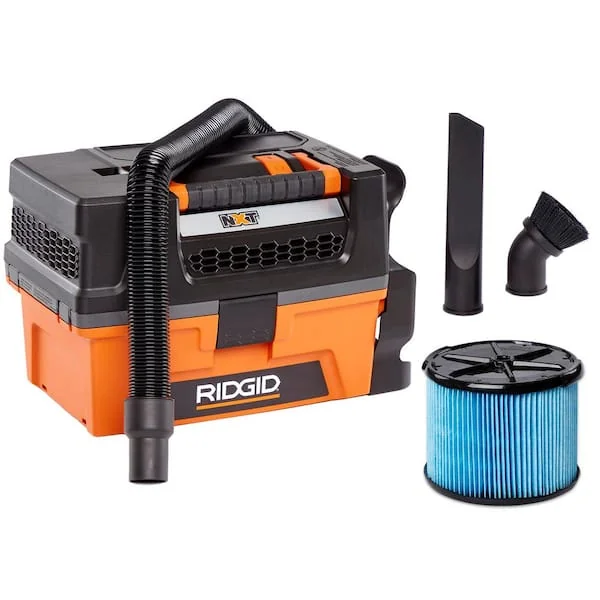
For moving between small jobs
RIDGID HD0300 wet/dry vacuum
Corded 3-gallon vacuum with a fine-dust filter, expandable hose, and attachments in the linked package.
- Why choose it
- The 3-gallon tank is a sensible starting point when carrying and storing the vacuum matter more than capacity.
- The tradeoff
- You will empty it more often. A fine-dust filter does not by itself make the whole vacuum a HEPA or hazardous-dust extractor.
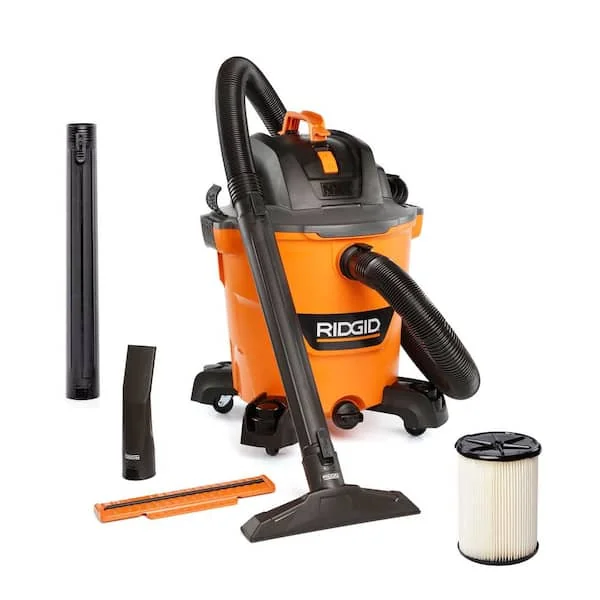
For more debris between emptying
RIDGID HD1200 wet/dry vacuum
Corded 12-gallon vacuum with a general-debris filter, locking hose, and attachments in the linked package.
- Why choose it
- The 12-gallon tank gives a concrete capacity step up for garage and workshop cleanup.
- The tradeoff
- It needs more room, and the supplied general-debris filter is not automatically suitable for fine dust or wet pickup. Follow the manual.
Product details checked against the linked manufacturer and retailer pages. These are research-based comparisons, not hands-on tests. Check the selected model, current price, availability, and return terms before buying.
Capacity is not cleaning performance
Tank size tells you how much the vacuum can hold, not how effectively it moves air or lifts debris. A larger tank also occupies more floor space and becomes heavier when filled. For ordinary household and workshop cleanup, a compact unit may be easier to use often than a high-capacity model.
Compare manufacturer airflow and sealed-pressure information when it is available, but remember that test methods can differ. Hose diameter, length, bends, filters, and attachments all affect performance at the pickup point.
Match the hose to the debris
Larger hoses handle chips and bulky debris with less clogging. Smaller hoses are easier to maneuver and can be better for cars, benches, and tool connections. Check whether the included adapters fit your tools and whether replacement hoses use a common connection.
Plan for dust and liquids separately
Fine dust requires appropriate filtration and careful handling. A general shop vacuum is not automatically suitable for hazardous dust, lead, asbestos, or every concrete-dust application. Follow the material and tool requirements, and use a certified extraction system where the work calls for one.
For wet pickup, follow the manual on filter removal or wet-use configuration. Confirm drain design if you expect meaningful liquid volume. Never assume a vacuum is approved for flammable or combustible liquids.
Check the ownership details
Noise, cord length, wheel stability, onboard storage, bag availability, replacement-filter cost, and switch accessibility matter over years of use. Price the vacuum with the filter, bags, adapters, and accessories your work needs. A sale on an unusual platform can become expensive if consumables are hard to source.
Match filtration to the material and tool
A filter label does not automatically make the entire vacuum system suitable for every fine-dust task. Check the tool and material instructions, required filtration class, collection method, bag use, sealing, and disposal procedure. Some work requires equipment designed and certified for a specific hazard rather than a general shop vacuum fitted with a better filter.
For ordinary sawdust and household debris, compare how quickly the chosen filter loads, whether a bag protects it, and how the vacuum maintains airflow. A filter-cleaning feature can help during repeated fine-dust use, but it does not remove the need for appropriate collection and maintenance.
| Debris | Prioritize | Common oversight |
|---|---|---|
| Large chips | Hose diameter and clog resistance | Using a narrow accessory path |
| Ordinary fine dust | Suitable filter, bag, and sealing | Ignoring filter-loading cost |
| Liquids | Approved wet setup and easy draining | Leaving the dry configuration unchanged |
| Regulated or hazardous dust | Task-specific compliant equipment | Assuming a filter upgrade is enough |