

Products to compare
A one-lens APS-C travel zoom and a fixed 50mm prime
These compatible lenses represent different one-lens travel plans on an APS-C EOS R body. The MPB link contains individual used RF-S 18-45mm zooms, while the Adorama link is a new RF 50mm f/1.8 prime. The links are uncommissioned. Verify the selected item, condition, contents, price, availability, and current terms.
Choose the RF-S 18-45mm when the trip needs wider scenes, people in context, interiors, and closer framing from one walking kit. Choose the RF 50mm when its narrower APS-C view fits the planned places and f/1.8 produces a tested low-light or subject-separation result worth accepting the missing wide coverage. Decide from the complete six-frame travel audition.
These links lead to product listings or manufacturer buying options. PriceChomp earns no commission from them. How our links work.
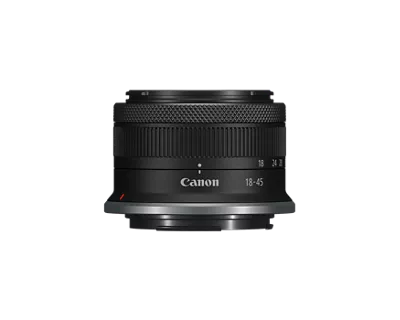
For one-lens coverage across varied travel scenes
Used Canon RF-S 18-45mm f/4.5-6.3 IS STM
APS-C-focused RF-mount 18-45mm standard zoom with optical stabilization and a variable maximum aperture.
- Why choose it
- Canon specifies an 18-45mm range, four-stop optical stabilization under its stated test conditions, STM focusing, and an approximate 130-gram weight. Test the widest place-setting frame, people in context, details, and the complete walking kit.
- The tradeoff
- Its maximum aperture changes from f/4.5 to f/6.3, and stabilization cannot stop a moving person. Inspect autofocus, stabilization, rings, the retracting mechanism, glass, mount, caps, and camera communication on the selected used copy.
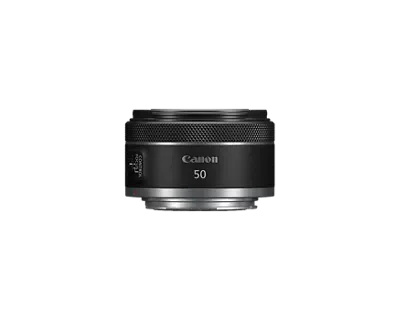
For one tested view and an f/1.8 option
Canon RF50mm F1.8 STM
Canon RF-mount 50mm f/1.8 prime for EOS R cameras; covers full-frame and APS-C sensors.
- Why choose it
- Canon specifies a fixed 50mm focal length, f/1.8 maximum aperture, STM focusing, and approximate 160-gram weight. Test the real APS-C view, working distance, subject motion, depth of field, and every required location.
- The tradeoff
- The fixed view cannot produce the zoom's wider coverage from the same position and can be too tight for interiors or groups. It has no in-lens stabilization specification, and adding another lens changes the cost and walking-load comparison.
Product details checked against the linked manufacturer and retailer pages. These are research-based comparisons, not hands-on tests. Check the selected model, current price, availability, and return terms before buying.
Write the trip story before choosing the lens
Travel photography is not one subject. A useful trip set may need an establishing view, architecture or an interior, a person inside the place, a closer expression, a meal or object, and an evening scene. Write the six frames you would regret missing. Add the smallest room, closest public boundary, darkest location, longest walking day, and whether changing lenses will be practical.
Canon vacation guidance recommends choosing gear around the pictures you want instead of bringing everything. That makes the decision concrete: the lens must complete your own list while still being carried and kept accessible. A technically capable lens left at the lodging does not cover the trip.
| Travel frame | Constraint to record | What the audition must prove |
|---|---|---|
| Place-setting view | How far you can step back | The landmark, room, or street fits without a forced crop |
| Person in context | Subject and background relationship | The place remains recognizable while the person reads clearly |
| Tighter expression | Working distance and subject movement | Framing, focus, and shutter speed survive a candid moment |
| Evening detail | Available light and camera policy | The required result works without assuming a tripod or flash is allowed |
Compare the views from positions you can actually use
Canon specifies an 18-45mm range for the RF-S zoom and a fixed 50mm focal length for the RF prime. On an APS-C body, 50mm is narrower than every setting on the zoom. That can isolate a person or detail when there is room, but it cannot record the zoom's wider view from the same camera position.
Mark realistic positions in a small room, on a sidewalk, at a table, and behind a barrier. Photograph the same subject at 18mm, 35mm, 45mm, and 50mm where your current equipment permits. Record what fits, what must be cropped, and whether getting the frame requires blocking traffic, leaning into another table, or stepping somewhere unavailable. The useful travel view is the one that works from a legal, safe, considerate position.
Separate framing from perspective
Camera position controls the perspective relationship between near and far objects. Focal length controls how much of that view is recorded from the position. Start with the camera on one mark and compare the zoom near 45mm with the 50mm prime. Then move only if needed to match the final framing and save that result too.
The fixed-position pair reveals the field-of-view difference. The matched-framing pair reveals the effect of changing camera distance. Compare the size of the background, spacing between foreground and landmark, and whether the new position is usable. This keeps a camera move from being mistaken for a property of the lens.
Build a sequence, not a folder of isolated favorites
Canon travel guidance suggests using wide shots to establish a scene and closer shots to carry emotion and detail. A short story can include the outside of a place, an arrival, an interaction, a detail, a portrait, and a final evening frame. The kit zoom can change coverage quickly from one position. The prime requires movement, a crop, or accepting one consistent view.
Walk through a local market, park, museum-like interior, or neighborhood and make the same six-frame sequence with each candidate. Do not substitute extra lenses. Count incomplete frames as evidence instead of deleting them from the assignment. A prime may create a coherent constraint you enjoy, while the zoom may preserve more of the place. The contact sheet should decide which benefit matters on your trip.
Test low light as two different problems
Canon specifies an f/1.8 maximum aperture for the 50mm prime and a variable f/4.5-6.3 maximum aperture for the zoom. Canon also rates the RF-S zoom for four stops of in-lens optical stabilization under its stated test conditions. A wider aperture can support a faster shutter in matched light, while stabilization can reduce some blur from camera movement. Stabilization does not stop a walking person, moving vehicle, gesture, or expression.
Test a stationary detail and a moving person in the same light. Keep the intended framing and final output size as close as practical. Record aperture, shutter speed, ISO, stabilization state, focus result, and how many frames are usable. The prime earns its low-light place only if its field of view and depth of field also work. The zoom earns its stabilization advantage only for subjects that remain still enough for the selected shutter speed.
Make people and places share the frame
A travel portrait often needs to show where the person is, not only who the person is. The zoom's wider settings can include architecture, landscape, signs, food, or activity around the subject. The 50mm prime can give the person more visual emphasis when the working distance and background permit it. Neither treatment is automatically more truthful or more flattering.
Make three versions from permitted positions: person small in the place, person and place balanced, and tighter expression. Hold the camera position once to compare coverage, then move only for the final matched compositions. Review whether the location remains legible, whether facial proportions and background relationships work, and whether you could communicate naturally with the subject.
Count access speed and handling during a walking day
Canon lists the RF-S zoom at approximately 130 grams and the RF 50mm prime at approximately 160 grams. That small lens-only difference does not predict which camera you will carry. Bag fit, hood, caps, strap, body, spare battery, cleaning supplies, and the need for another lens determine the actual walking load.
Pack the complete day kit for each option and weigh it. Walk your normal outing length, stop at six unplanned subjects, and record how long it takes to make the intended frame. Note lens changes, missed moments, bag openings, and whether the camera stays accessible. If choosing the prime forces a second lens into the bag, compare that complete kit against the one-lens zoom plan.
Plan for interiors, groups, and fixed boundaries
Museums, restaurants, historic interiors, tours, overlooks, and transit platforms often limit where a photographer can stand. Groups add another requirement because every person and enough surrounding context must fit. A 50mm prime on APS-C can be too narrow even when it works well for a single face outdoors.
Recreate the smallest expected room with chairs or tape and assemble the largest likely group. Try a full-room detail, a person at a table, and the group without stepping past the boundary. Inspect edge placement and every required face at the delivery size. If the prime cannot make the frame, decide before travel whether that is an accepted creative limit or evidence that the zoom should be the one-lens choice.
Inspect the exact used zoom and the complete new prime cart
The MPB destination contains individual used RF-S 18-45mm copies. Save the selected copy's condition report and included-item list. Inspect the glass, mount, rings, retracting action, autofocus, stabilization, and camera communication while the written remedy remains usable. Confirm caps and any hood rather than assuming the model-level photo describes the chosen unit.
The Adorama destination is the exact new RF 50mm f/1.8 model. Separate the lens from optional bundles, protection plans, filters, financing, and promotional extras. Verify the current cart, availability, return terms, and manufacturer coverage at checkout. This comparison publishes no live price or stock claim because both can change after review.
Price the whole travel system
Compare delivered totals for the kit that can complete the trip. Include any hood, filter that solves a named need, bag change, strap, spare battery, charger, memory, cleaning kit, support, and insurance decision. Do not count an accessory on one side if the other setup also needs it.
Add the cost and carrying burden of a second lens if the first choice cannot cover a required frame. Also price the no-purchase option: use the current lens, change the shot list, improve carrying access, or rent for the trip. A lower lens price is not a lower travel-system cost when it creates an immediate gap you must buy around.
Run a six-frame travel audition and decide
Complete one realistic walking day with each candidate. Make an establishing view, interior or architecture frame, person in context, tighter expression, small detail, and evening frame. Use the same route, boundaries, carry method, and output target. Record focal length, camera position, aperture, shutter speed, ISO, focus result, setup time, bag openings, and every frame you could not complete.
Finish with one sentence: Choose the zoom because ____ required frames need its wider or adjustable view and its complete walking kit remains practical. Choose the 50mm prime because its tested view fits ____, f/1.8 improves ____, and the missed wider frames are acceptable. Choose neither when the audition points to another focal range, better carrying setup, support, light, or rental as the real solution.