

Products to compare
A wider-aperture prime and a stabilized zoom
These exact RF-mount examples illustrate different low-light tools. The Adorama link is a new fixed 50mm f/1.8 lens, while the MPB link contains individual used 24-105mm f/4-7.1 stabilized zooms. The links are uncommissioned. Verify the selected item, condition, contents, price, availability, and current terms.
Choose the RF 50mm f/1.8 only when its fixed view, wider aperture, and depth of field fit the scene. Choose an RF 24-105mm f/4-7.1 IS STM copy only when its zoom range and stabilization solve camera movement for subjects that tolerate the required shutter speed. Test matched framing before choosing.
These links lead to product listings or manufacturer buying options. PriceChomp earns no commission from them. How our links work.
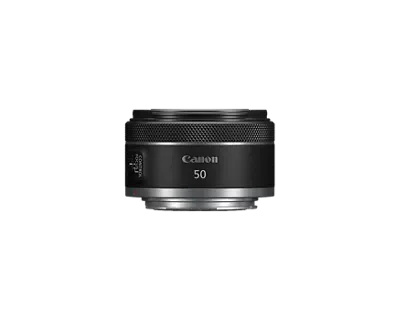
For a wider aperture at one fixed view
Canon RF50mm F1.8 STM
Canon RF-mount 50mm f/1.8 prime for EOS R cameras; covers full-frame and APS-C sensors.
- Why choose it
- Canon specifies a 50mm focal length and f/1.8 maximum aperture. This is the path to test when subject motion requires a faster shutter and the fixed framing works.
- The tradeoff
- It does not provide zoom framing, and a wider aperture reduces depth of field. Test the 50mm view on your sensor format before treating it as a low-light solution.
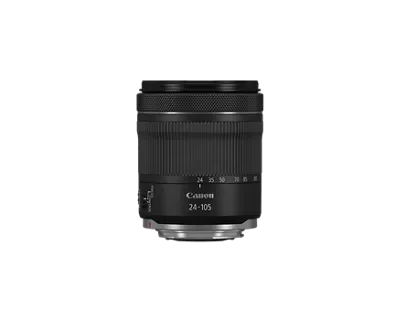
For stabilized handheld framing across a range
Used Canon RF 24-105mm f/4-7.1 IS STM
RF-mount full-frame standard zoom with optical stabilization and a variable maximum aperture.
- Why choose it
- Canon specifies a 24-105mm range and optical stabilization rated up to five stops under its stated condition. MPB lets you inspect the selected used copy and included items.
- The tradeoff
- Stabilization reduces camera-shake blur, not subject-motion blur. The maximum aperture changes through the zoom range, and every used copy still needs a complete functional check.
Product details checked against the linked manufacturer and retailer pages. These are research-based comparisons, not hands-on tests. Check the selected model, current price, availability, and return terms before buying.
Name the blur before shopping
Low-light blur has more than one cause. Camera-shake blur comes from movement of the camera during the exposure. Subject-motion blur comes from movement inside the scene. A photograph can contain both, and the same soft-looking result can also come from missed focus, insufficient depth of field, atmospheric haze, aggressive noise reduction, or viewing a small crop too closely.
Recreate the failed photograph and inspect recognizable edges. If every stationary edge moves in the same direction, camera movement is a likely cause. If the background is sharp while a person, pet, leaf, or wheel smears, subject motion is the likely cause. If only the intended subject is soft while another distance is sharp, check focus and depth of field before blaming low light.
| What you see | First suspect | First test |
|---|---|---|
| Stationary edges smear together | Camera movement | Repeat from stable support at the same settings |
| Moving subject blurs against a sharp scene | Subject movement | Raise shutter speed and compare |
| Another distance is sharp | Focus or depth of field | Repeat focus and inspect the focus plane |
| Everything is detailed but coarse | High ISO noise or processing | Compare the original file at the intended output size |
Set the shutter speed for the subject first
For a moving subject, choose the shutter speed needed to render that movement the way you want before evaluating stabilization or aperture. There is no universal subject-freezing number. Direction, speed, distance, focal length, output size, and whether you pan with the subject all change the result. Test the actual activity instead of copying a setting from another photograph.
Canon explicitly distinguishes camera shake from subject motion: optical stabilization can reduce the effect of camera movement, but it does not freeze a moving subject. If the necessary shutter speed makes the image too dark, the remaining choices include opening the aperture, adding light, increasing ISO, changing the scene, or accepting deliberate motion blur. Stabilization cannot replace that shutter-speed decision.
Use stabilization for camera movement
Stabilization is most valuable when hand movement is the limiting factor and the subject can tolerate the slower shutter speed you want to use. That often describes static interiors, still objects, quiet scenes, and some video movements. Its benefit depends on technique, focal length, focus distance, camera and lens combination, direction of movement, and the individual exposure. A maker rating is a test result under stated conditions, not a promise for every frame.
Canon specifies optical image stabilization rated up to five stops for the RF24-105mm F4-7.1 IS STM under its stated test condition. Treat that as a capability to test, not permission to subtract exactly five stops from every handheld exposure. Make a short burst at several shutter speeds, inspect each frame at the final output size, and find your own repeatable limit.
- Test with stabilization on and off at the same focal length and framing.
- Use the stance and shooting position you will have in the real scene.
- Judge a group of frames because one lucky exposure is not a reliable limit.
- Check the lens and camera instructions for tripod, panning, and video behavior.
Use a wider aperture when shutter speed must stay high
A wider aperture admits more light during the same exposure time. That can let you retain a subject-freezing shutter speed at a lower ISO, but it also reduces depth of field for the same framing, distance, and format. The trade can be excellent for one face on a single plane and poor for a group arranged at several distances.
Canon specifies the RF50mm F1.8 STM as a fixed 50mm RF-mount lens with an f/1.8 maximum aperture. That specification makes it a useful wider-aperture example, but the fixed view must still fit the assignment. On an APS-C body, test the resulting field of view in the intended space. A bright lens that cannot frame the subject is not a low-light solution.
Do not compare aperture labels without matching the photograph
The RF 50mm prime and RF 24-105mm zoom are not the same framing tool. To compare their low-light usefulness, set the zoom near 50mm, keep the camera position and subject distance fixed, and record the maximum aperture the camera reports at that focal length. Then make matched photographs at the shutter speed required by the subject. Do not compare a wide 24mm frame with a tighter 50mm frame and attribute every difference to aperture or stabilization.
Repeat the test with a static subject and a moving subject. The stabilized zoom may support a slower handheld shutter for the static scene. The wider-aperture prime may preserve a faster shutter for movement. Neither result proves that one lens is generally better, because the zoom range, fixed focal length, depth of field, size, condition, and complete cost remain part of the purchase.
| Test | Hold constant | What the result answers |
|---|---|---|
| Static subject | Framing, exposure target, ISO, and output size | Whether stabilization extends your repeatable handheld limit |
| Moving subject | Framing, required shutter speed, ISO, and output size | Whether the wider aperture improves the usable exposure |
| Depth-of-field check | Framing, focus point, and viewing size | Whether the wider aperture keeps enough of the subject sharp |
| Carry test | Body, strap, bag, and intended duration | Whether the lens will actually be available when light falls |
Price the alternatives before buying a lens
A tripod, monopod, brace, flash, continuous light, reflector, different shooting position, or better-timed moment may solve the photograph for less money. Support helps only when the scene and location allow it. Added light changes the appearance of the scene and may be prohibited or distracting. A higher ISO may be acceptable when the final image is small or modern processing preserves the needed detail.
Test each acceptable alternative against the real constraint. A tripod cannot freeze a running child. A flash may not reach a distant subject. A wider aperture cannot keep several rows of people sharp when depth of field is already too thin. The lowest-cost solution is the one that produces the required result, not the item with the lowest checkout total.
Separate the optical decision from condition
First decide whether stabilization, aperture, focal-length range, or another method solves the scene. Then compare new and used offers for the chosen exact model. A new RF50mm f/1.8 listing and individual used RF24-105mm f/4-7.1 listings illustrate two different optical paths, not interchangeable bargains.
For a used stabilized lens, test the stabilizer, autofocus, zoom and focus rings, switches, aperture operation, glass, mount, and communication with the intended body while the written remedy is usable. For a new lens, still verify alignment, focus, included items, mount compatibility, and the current return and warranty terms. Do not let a condition label decide which optical tool you need.
Finish with a scene-specific decision
Write: My subject requires ____ shutter speed. At that speed, the current setup fails because ____. Stabilization will or will not address that cause. A wider aperture will or will not provide enough light while keeping ____ acceptably sharp. Then attach one test frame or rental result to the statement.
Choose stabilization when camera movement is the demonstrated limit and the subject can remain sharp at a slower shutter. Choose the wider aperture when subject motion sets the shutter speed and the reduced depth of field is acceptable. Choose support or added light when it solves the scene more directly. Choose nothing yet when you have not separated camera shake, subject motion, focus, and depth of field.