

Products to compare
Read the seller promise behind the label
A manufacturer-refurbished R50 and a used R50 from a specialist are useful examples of different condition channels. Neither link is presented as an open-box or renewed offer.
Compare who inspected the item, what is included, and what happens if it fails your arrival checks. Buy the clearer, better-value offer rather than ranking condition words in isolation.
These links lead to product listings or manufacturer buying options. PriceChomp earns no commission from them. How our links work.
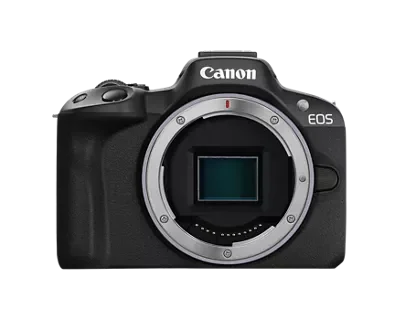
A named refurbishment seller
Refurbished Canon EOS R50 body
Canon refurbished R50 body listing. Read the selected offer for contents and coverage.
- Why choose it
- Canon is the seller behind this refurbished listing, so you can inspect its stated coverage before comparing the total.
- The tradeoff
- Refurbished does not mean unopened. Confirm accessories and which return and warranty terms apply to this offer.
A unit-specific used listing
Used Canon EOS R50 at MPB
R50 body listings with individual condition reports, photographs, and included-item lists.
- Why choose it
- MPB's individual listings let you compare the report and photographs for the copy you would actually receive.
- The tradeoff
- A used listing is not a manufacturer-refurbished promise. Missing accessories and unit-specific faults can outweigh a lower price.
Product details checked against the linked manufacturer and retailer pages. These are research-based comparisons, not hands-on tests. Check the selected model, current price, availability, and return terms before buying.
Condition words are not universal grades
Open-box often suggests a return or damaged packaging, while refurbished suggests inspection or repair. Renewed may be a marketplace program label. None of these words alone tells you who tested the item, what was replaced, how cosmetic wear is graded, or whether every original accessory is present.
Read the retailer or marketplace definition attached to the exact listing. Record the seller, fulfiller, condition grade, included parts, warranty provider, and return window before comparing it with a new item.
Put a price on missing certainty
The discount should compensate for shorter coverage, cosmetic wear, missing accessories, battery history, and the time required to test the item. A modest discount may be reasonable on a simple product with an easy return. It may be inadequate on a device with expensive parts or hard-to-diagnose faults.
Inspect and test promptly
Document the package and serial number when it arrives. Check every included component and test the functions you care about while the return window is open. For battery products, check charging, runtime behavior, and any available health information. Reset connected devices and confirm they are not locked to a prior owner.
- Seller and fulfillment identity.
- Written condition definition.
- Parts and accessories list.
- Return deadline and restocking terms.
- Warranty length and responsible party.
Compare against the best new price
Do not compare only with MSRP. Compare the used-condition offer with the best credible current price for a new exact match. Seasonal promotions can narrow the gap enough that new is the better value. Keep the condition evidence and receipt until you are satisfied the product is complete and stable.
Set a minimum discount for the actual risk
There is no universal percentage that makes an open-box product worthwhile. Start with the best current new price, then subtract the amount you require for cosmetic uncertainty, shorter return rights, missing packaging, reduced warranty, unknown battery use, and the time required to inspect and possibly return the item. The result is your maximum acceptable price.
The required gap can be small for a simple, locally returnable item that you can test completely. It should generally be larger when faults are intermittent, accessories are expensive, shipping is difficult, or the seller rather than the manufacturer controls the warranty.
| Risk factor | Lower concern | Higher concern |
|---|---|---|
| Return process | Local and straightforward | Shipping, fees, or final sale |
| Testing | Complete test is easy | Fault may appear over time |
| Missing parts | Common inexpensive accessory | Proprietary or essential component |
| Warranty | Full manufacturer coverage | Seller-only or unclear coverage |