

Products to compare
Two washer classes for different workloads
These examples differ in both water flow and power source. They are not equivalent machines with different PSI labels.
Start with the electric RYOBI for light cleaning within reach of suitable power and water. Consider the gas SIMPSON for a workload that justifies its higher flow and engine maintenance, where that version is sold.
These links lead to product listings or manufacturer buying options. PriceChomp earns no commission from them. How our links work.
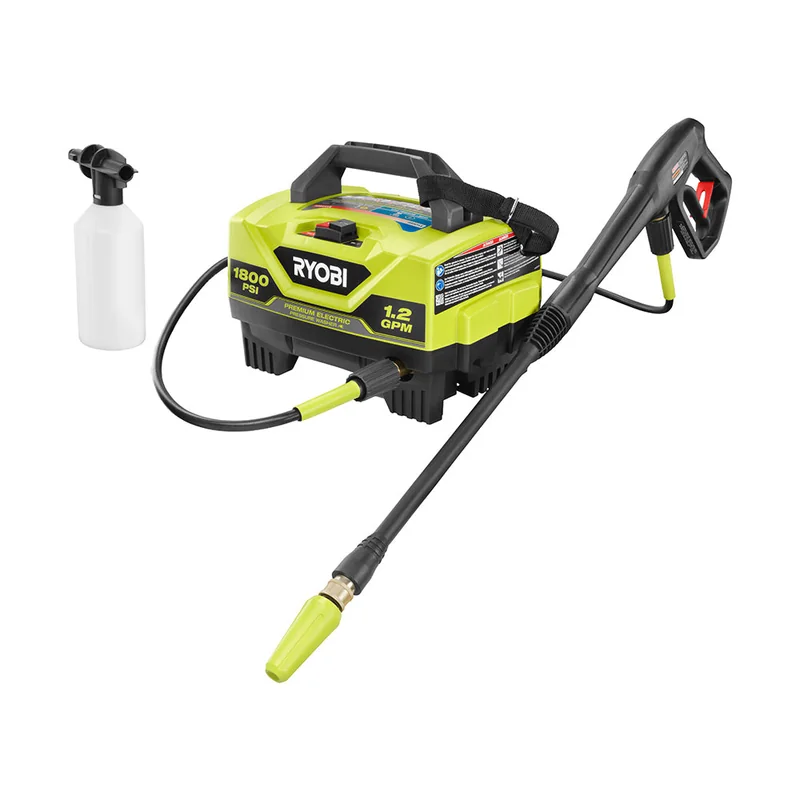
For occasional light cleaning
RYOBI RY141802 electric pressure washer
Corded electric washer rated at 1800 PSI and 1.2 GPM.
- Why choose it
- The 1.2 GPM electric model is a useful baseline for small tasks without engine upkeep.
- The tradeoff
- Cord reach and lower flow can constrain larger jobs. Use the surface-appropriate nozzle and distance specified by the manual.
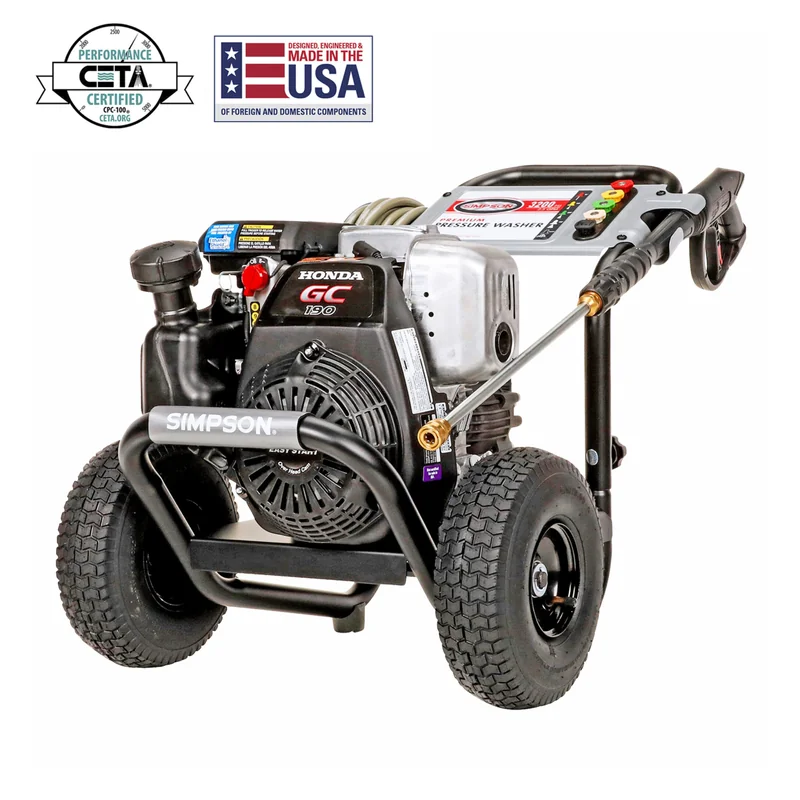
When more flow earns the upkeep
SIMPSON MegaShot MSH3125-S
Gas pressure washer rated at 3200 PSI and 2.5 GPM, with a Honda GC190 engine. This version does not ship to California.
- Why choose it
- Its 2.5 GPM rating gives a concrete flow comparison for larger cleaning tasks.
- The tradeoff
- Fuel, maintenance, storage, and exhaust add obligations. This 49-state version does not ship to California; more pressure can also damage surfaces.
Product details checked against the linked manufacturer and retailer pages. These are research-based comparisons, not hands-on tests. Check the selected model, current price, availability, and return terms before buying.
Write down five real cleaning jobs
Pressure-washer shopping becomes much easier when you stop comparing machines in the abstract. List the surfaces you expect to clean, how often you will clean them, the size of the area, the distance from water and power, and whether you must transport the machine. A compact electric unit that is easy to set up may clean a car and small patio more often than a powerful gas machine that is difficult to store.
Pressure can damage wood fibers, paint, seals, mortar, screens, and soft exterior materials. More output is not automatically better. The useful machine is the one that can deliver appropriate cleaning force with enough control, the correct nozzle, and a manageable working distance.
- Vehicle and equipment washing.
- Concrete, pavers, or masonry.
- Wood decks and fences.
- Siding and outdoor furniture.
- Large recurring jobs or occasional spot cleaning.
Read pressure and flow together
PSI describes pressure, while GPM describes water flow. Pressure helps loosen material and flow helps carry it away. A high-PSI machine with limited flow can feel slow across a broad driveway. A lower-pressure machine with useful flow may rinse routine dirt efficiently while giving the operator more control.
Do not assume that multiplying PSI by GPM produces a standardized performance score that makes every brand directly comparable. Published ratings, test methods, included nozzles, hose restrictions, and real operating conditions can differ. Use both numbers to identify the general class, then compare setup quality, warranty, owner documentation, and evidence from the exact model.
| Your priority | Usually favors electric | Usually favors gas |
|---|---|---|
| Fast setup and compact storage | Yes | Less often |
| Long sessions on large hard surfaces | Possible, model dependent | Often |
| Low maintenance and no stored fuel | Yes | No |
| Work far from an outlet | Requires a suitable power plan | Yes |
| Lower noise and easier transport | Usually | Less often |
Inspect the complete working setup
Hose length, cord length, wheel design, handle height, nozzle storage, connection quality, and the location of the inlet affect every use. A short pressure hose can force you to move the machine repeatedly. A stiff hose can fight you around a vehicle. Small wheels that look tidy in a product image may be frustrating on gravel or steps.
Check whether the advertised package includes the nozzle types, surface cleaner, detergent system, quick connectors, and adapters you need. Price compatible additions before deciding. A more expensive package can be the lower-cost option when it already includes a useful hose and surface cleaner.
Account for ownership and storage
Electric machines avoid fuel storage and engine service, but pumps, seals, hoses, cords, and connectors still need care. Gas machines add oil checks, fuel management, starting procedures, and seasonal storage. Read the manual before purchase so the maintenance schedule is part of the decision rather than a surprise.
Both types need freeze protection where temperatures fall below freezing. Check the manufacturer storage instructions and whether pump-protection products are specified. Also verify access to replacement hoses, spray guns, nozzles, and authorized service. A low purchase price loses its advantage if a proprietary connector makes a normal replacement expensive.
Choose the safer amount of capability
Start with the least aggressive nozzle and a generous distance from the surface, then follow the product and surface instructions. Never use a pressure washer on people or animals, and do not use an electric model with unsafe cords, connections, or power arrangements. Gas engines produce exhaust and must be operated only where the manufacturer permits with appropriate ventilation.
For occasional household cleaning, ease of setup and control usually create more value than maximum output. For recurring large-area work, the time saved by higher sustained cleaning capacity may justify the extra maintenance. The right answer comes from annual workload, not the largest number printed on the carton.