

Products to compare
One tool for holes, one for repeated fastening
These tool-only options share a battery family, making the job itself the useful distinction.
For a first general-purpose tool, start with the DCD800B if you need holes and controlled screw driving. Choose the DCF850B when repeated fastening is the main task and you already have drilling covered.
These links lead to product listings or manufacturer buying options. PriceChomp earns no commission from them. How our links work.
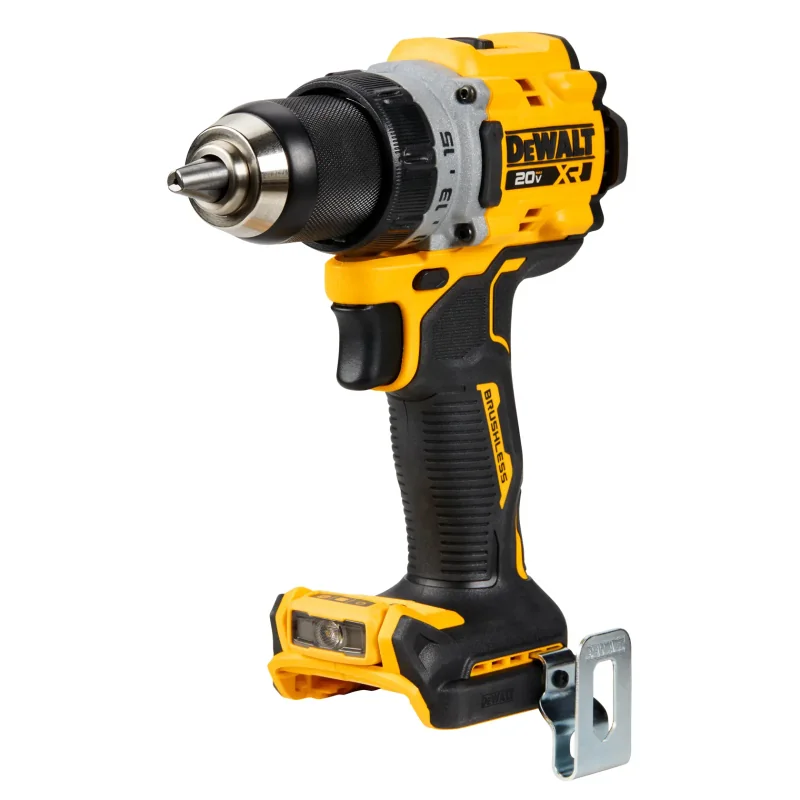
Start with mixed household jobs
DEWALT DCD800B drill/driver, tool only
Brushless DCD800 drill/driver with a 1/2-inch chuck and belt hook. Battery and charger sold separately.
- Why choose it
- The adjustable chuck accepts a range of drill bits, and the clutch helps with controlled screw driving.
- The tradeoff
- It is not a hammer drill. Neither a battery nor a charger comes with this bare tool.
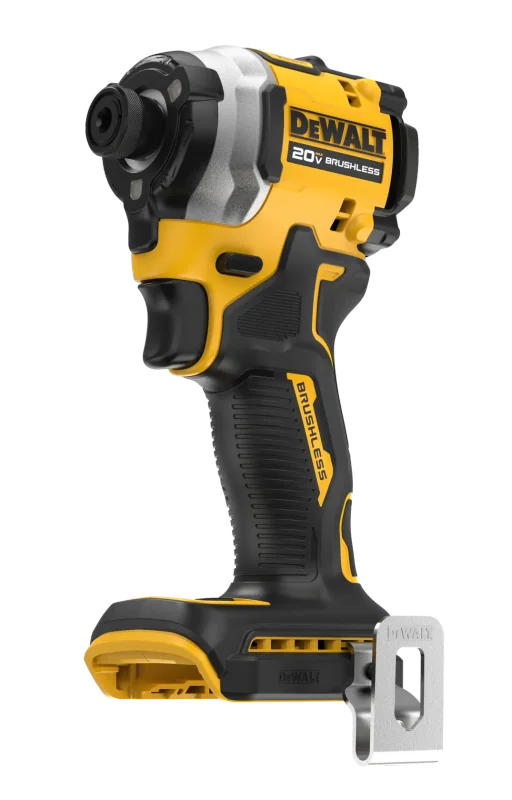
For repeated screw driving
DEWALT DCF850B impact driver, tool only
20V MAX brushless impact driver with a 1/4-inch hex holder and three speeds. Battery and charger separate.
- Why choose it
- The hex holder and impact action suit repeated fastening with appropriate impact-rated bits.
- The tradeoff
- It does not replace the drill's general-purpose chuck or delicate clutch control. Add compatible power equipment and bits.
Product details checked against the linked manufacturer and retailer pages. These are research-based comparisons, not hands-on tests. Check the selected model, current price, availability, and return terms before buying.
The short answer
A drill is the more flexible first purchase for drilling holes and driving a wide range of fasteners. Its adjustable clutch and three-jaw chuck accept many common bits. An impact driver is especially effective for repetitive fastening and longer screws, but its quick-change hex collet requires compatible bits and its hammering action is louder.
Many households eventually benefit from both. The first purchase should follow the work already on your list, not a general claim that one tool is always superior.
Choose a drill for control and variety
Choose a drill when your work includes holes in wood or metal, delicate hardware, furniture assembly, or accessories with round shanks. The clutch can reduce overdriving, and variable speed helps with controlled starts. Hammer-drill models add a mode for occasional masonry work, though they are not a substitute for a rotary hammer on demanding jobs.
Choose an impact driver for fastening
Choose an impact driver when your work centers on structural screws, deck fasteners, cabinets, or repeated driving. Its compact head can fit tighter spaces, and the impact mechanism reduces the twisting force felt at the wrist. Use impact-rated bits and hearing protection when the work is sustained.
Compare kits on more than torque
Published torque numbers are not always measured in directly comparable ways. Examine size, weight with battery, speed settings, trigger control, chuck or collet behavior, light placement, warranty, and battery-platform cost. A compact tool you can control is often more useful than a stronger model that is tiring or awkward.
If a two-tool kit costs only modestly more than the single tool and includes a useful battery and charger, price the components carefully. Otherwise, buy the tool that solves the immediate job and leave room to add the second later.
Use the next-three-project test
Write down the next three projects you are likely to start, not an imaginary future workshop. For each project, list the holes, fasteners, and materials involved. A drill earns a point for every task that needs round-shank bits, controlled clutch settings, or general drilling. An impact driver earns a point for every task dominated by long fasteners, repetitive driving, or tight access.
Also price the correct bits. Impact-rated driver bits and sockets are consumable equipment. Drill bits vary by material, size, and quality. A low tool price can be misleading when the first useful bit set costs nearly as much as the difference between two kits.