

Products to compare
Price the mower and the tool you will add next
These complementary EGO tools use the same 56V battery family. Compare a planned system rather than choosing a platform from one discounted tool.
Size the system around mowing first, then decide whether the trimmer kit's smaller battery and second charger are useful. Shared voltage does not make every battery equally suited to every workload.
These links lead to product listings or manufacturer buying options. PriceChomp earns no commission from them. How our links work.
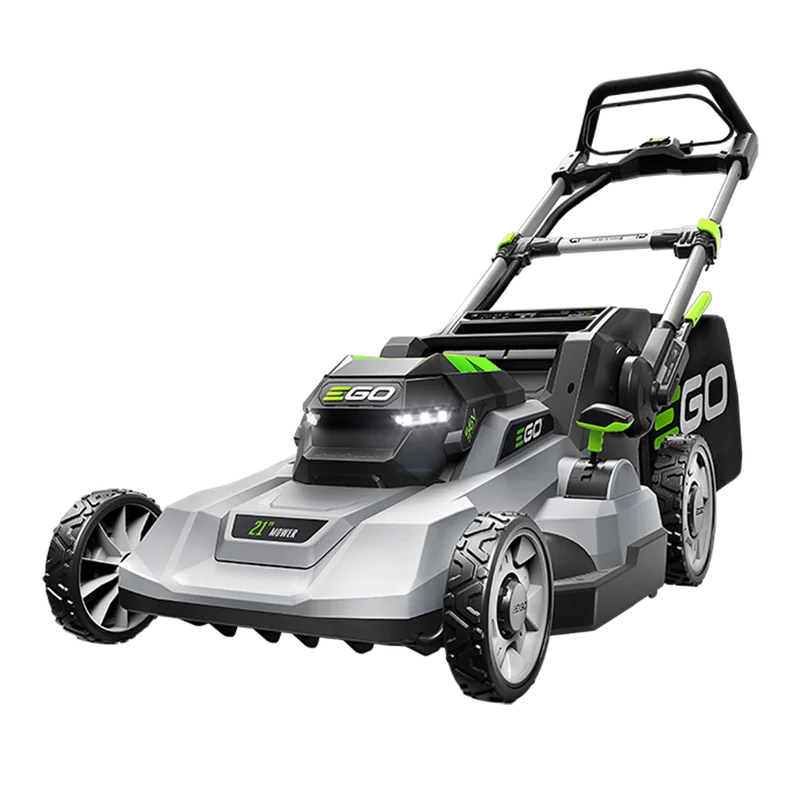
The mowing workload comes first
EGO POWER+ LM2114 mower kit
21-inch push mower using the EGO 56V ARC Lithium platform. Select LM2114 with its 6.0Ah battery and charger.
- Why choose it
- The LM2114 kit provides a mower-focused 6.0Ah starting point for pricing the platform.
- The tradeoff
- Actual runtime depends on the lawn and conditions. A compatible smaller pack is not a promise that it will finish the same area.
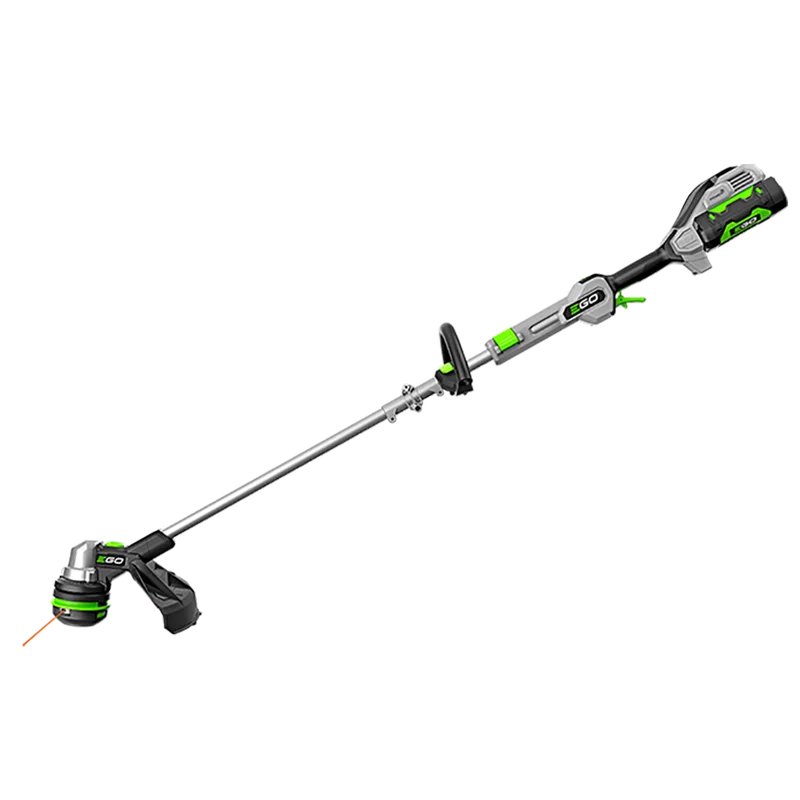
A realistic next tool in the platform
EGO POWER+ ST1511T trimmer kit
15-inch POWERLOAD trimmer with telescopic aluminum shaft, 56V 2.5Ah battery, and standard charger.
- Why choose it
- The ST1511T kit lets you put trimming and its 2.5Ah battery into the same ownership-cost plan.
- The tradeoff
- Do not count the second charger as a saving if you do not need it. Compare the corresponding tool-only offer when batteries are already covered.
Product details checked against the linked manufacturer and retailer pages. These are research-based comparisons, not hands-on tests. Check the selected model, current price, availability, and return terms before buying.
Let the hardest job set the platform
A blower or string trimmer can make many battery systems look capable because the work is intermittent. A mower, snow blower, chainsaw, or sustained leaf-clearing session exposes battery limits more quickly. Start with the job that requires the most continuous energy and the least tolerance for stopping.
Record lawn area, slope, grass density, typical moisture, obstacles, desired cutting height, and whether you mulch, bag, or discharge. Manufacturer runtime claims are useful as orientation, but actual demand changes with conditions and operating style. If finishing in one session matters, plan enough usable battery capacity for a difficult day rather than a perfect one.
Separate voltage, capacity, and stored energy
Voltage identifies the electrical family and is central to compatibility. Amp-hours describe charge capacity within that voltage family. Watt-hours, calculated from nominal voltage and amp-hours, provide a rougher way to compare stored energy across packs, although usable output and tool efficiency still vary.
Two batteries with similar watt-hours are not necessarily interchangeable or equal under heavy load. Pack electronics, cell design, cooling, maximum current, tool firmware, and temperature protection affect behavior. Compare batteries only within the compatibility rules published for the exact platform and tool.
| Specification | Useful for | Does not prove |
|---|---|---|
| Voltage family | Basic platform compatibility | Runtime or power by itself |
| Amp-hours | Capacity comparison within one voltage family | Equal performance across different platforms |
| Watt-hours | Approximate stored-energy comparison | Usable runtime under every load |
| Charge time | Planning turnaround between sessions | Battery longevity without test conditions |
Price the second battery before the first tool
A starter kit may look attractive because the included battery is heavily discounted. The long-term platform cost depends on what a second useful battery costs, whether larger packs are routinely available, and whether the standard charger can turn them around between jobs. Check both normal street prices and common promotional patterns.
Assign low value to a battery that is too small for your main tool or so heavy that it makes a handheld tool unpleasant. Some households benefit from one large mower pack and a smaller pack for trimming. Others need two matched packs because a tool operates on a pair. Make sure the advertised kit count describes what the tool actually requires.
Audit the tools you may really add
Do not give a platform credit for fifty tools you will never own. Make a two-year list of likely additions, then inspect those exact models for weight, performance, availability, and price. A strong mower platform may have an awkward hedge trimmer. A broad tool family may lack the specialty attachment you need.
Check whether the brand operates multiple battery families with similar names. Look for exclusions involving older packs, high-output packs, adapters, dual-voltage products, or paired-battery tools. Compatibility should be stated by the manufacturer, not inferred from the shape or logo.
Include storage, service, and battery aging
Batteries age with time, temperature, charge state, and use. Follow the manufacturer instructions for seasonal storage, charging, and temperature limits. Plan a dry, protected location for batteries and a safe charging arrangement. A charger that must live in a crowded shed may be less convenient than the product page suggests.
Compare battery and tool warranty terms separately. Find out whether service is handled locally, by mail, or through the retailer, and whether the brand has a clear process for battery diagnostics. Keep receipts and serial information. A platform purchase is a relationship with its replacement-parts and support system, not just a one-time tool decision.
Use a platform scorecard
Score each candidate from one to five on completion of the hardest job, battery-set cost, charging turnaround, comfort of likely handheld tools, service access, and two-year expansion fit. Double the weight of the hardest job and battery-set cost. This prevents a free bonus tool from overwhelming the factors that affect every week of ownership.
If two platforms score closely, buy from the retailer with the clearer return process and test the main tool promptly. Real handling, noise, controls, and completion time can settle a comparison that specifications cannot.